Support the Show:
New Podcast:
News:
Description:
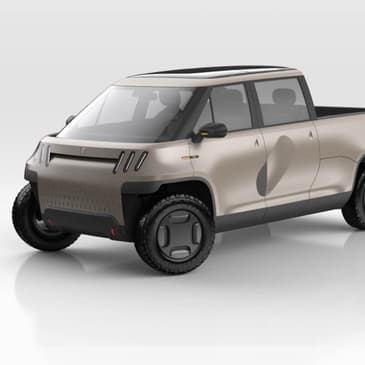
In this episode of Kilowatt, we delve into the world of electric vehicles, renewable energy, and autonomous driving. Today I'm joined by industry professionals Forrest North and Jason Marks, the co-founders of TeloTrucks, a company pioneering innovative electric pickup trucks, we uncover the unique features and inspirations behind their Mini Cooper-sized EV pickup trucks. With a focus on urban functionality and environmental consciousness, TeloTrucks aims to revolutionize city transportation with their compact yet powerful electric trucks.
Forrest and Jason take us through their EV journey, from electric motorcycles to founding TeloTrucks, stressing the importance of addressing the challenges of traditional pickup trucks' size and offering eco-friendly alternatives for urbanites. The design intricacies, such as the exposed front wheel and mid-gate design enhancing aerodynamics and utility, are explored, showcasing TeloTrucks' commitment to merging practicality with sustainability. They shed light on the battery technology driving their trucks, targeting over 300 miles of range to cater to diverse consumer needs.
The conversation evolves as we uncover TeloTrucks' target audience, emphasizing urban residents and commercial entities seeking efficient and environmentally friendly transport solutions. Drawing comparisons with industry giants like Tesla and Hyundai, Forrest and Jason highlight their commitment to high range capabilities, expanding city dwellers' exploration horizons. From design philosophies to battery optimization, the episode offers a comprehensive glimpse into TeloTrucks' pioneering contributions to the electric vehicle industry, geared towards modern urban lifestyles.
Transitioning to battery pack intricacies, we liken their importance to the engine of traditional vehicles, emphasizing custom-tailored designs optimizing capacity, cooling efficiency, and safety. Debunking myths around battery cell technology and advocating for holistic charging practices, the speakers delve into the nuances of charging rates, voltage, and longevity, drawing parallels between phone and EV charging habits. Safety features take center stage, with a focus on predictive technologies and user-centric interfaces prioritizing pedestrian safety and impact mitigation.
Exploring TeloTrucks' user-centric approach through the Discord forum, we witness a collaborative paradigm shaping the vehicle's roadmap based on direct customer feedback. The fusion of technical insights, safety considerations, and design principles underlines the innovative spirit propelling TeloTrucks' electric vehicle design and technology. The episode culminates with a spotlight on the evolving electric vehicle landscape, charging infrastructure challenges, and TeloTrucks' roadmap, inviting listeners to engage with the community and be part of the electric vehicle revolution.
*ART PROVIDED BY DALL-e
Support this show http://supporter.acast.com/kilowatt.
Hosted on Acast. See acast.com/privacy for more information.
Hosted by Simplecast, an AdsWizz company. See pcm.adswizz.com for information about our collection and use of personal data for advertising.
[00:00:00] My business used to be weighed down by the complexities of in-person payments.
[00:00:04] Then, Tap2Pay on iPhone and Stripe came along and changed everything.
[00:00:10] With Tap2Pay on iPhone and Stripe, I streamlined my payment process effortlessly.
[00:00:15] Now I can accept in-person, contactless payments right from my iPhone.
[00:00:20] No extra hardware required.
[00:00:21] What's truly remarkable is how I can cater to all of my customers' payment preferences.
[00:00:26] Whether they're using cards, Apple Pay or other digital wallets, Tap2Pay on iPhone and
[00:00:31] Stripe ensure a smooth checkout experience every time.
[00:00:36] And it's not just me.
[00:00:37] Stripe helps businesses of all sizes, from local markets to global retailers, scale
[00:00:42] quickly and stay agile.
[00:00:44] To learn how Tap2Pay on iPhone and Stripe can help grow your revenue and reach, visit
[00:00:48] stripe.com slash tap iPhone.
[00:01:18] Hello everyone and welcome to Kilowatt, a podcast about electric vehicles, renewable
[00:01:49] energy and autonomous driving or I guess autonomous driving and much, much more.
[00:01:54] My name is Bodhi and I am your host and on today's episode we're going to talk
[00:01:57] about electric vehicles.
[00:01:59] I had the very good fortune to interview Jason Marks and Forrest North who are
[00:02:04] two of the three co-founders of Telo Trucks.
[00:02:08] Now if you don't know what Telo Trucks is, stop this, stop what you're doing.
[00:02:13] Go to telotrucks.com and check out their really cool looking EV pickup truck.
[00:02:19] It is roughly the size of a two-door Mini Cooper.
[00:02:22] Actually it's exactly the same length as a two-door Mini Cooper which is 152 inches
[00:02:29] and it seats five people.
[00:02:30] This is a really neat truck.
[00:02:33] Before we get to the interview, this morning Joseph sent me an email saying that
[00:02:38] Telo Trucks just closed a five plus million dollar round and when I was talking
[00:02:43] to the fellows in the interview they had closed a six million dollar round
[00:02:49] recently as well.
[00:02:50] So big congratulations to the Telo team.
[00:02:54] Alright enough of the small talk.
[00:02:55] Let's welcome Forrest and Jason to the show.
[00:02:58] Thanks for having us.
[00:02:59] Thanks for having us.
[00:03:00] I'm really excited to have this conversation with you.
[00:03:04] There's a lot that you're doing that I find very interesting.
[00:03:07] I like the products that are just kind of like weird one-offs that we don't typically
[00:03:14] see and I think that's what you're doing at Telo.
[00:03:17] But before we get into that, I just wanted to introduce yourself and just kind of
[00:03:21] give us a little bit about your background and we'll start with Forrest on this.
[00:03:25] Sure.
[00:03:26] Hi, I'm Forrest North.
[00:03:27] I've been working on EVs for 20 years.
[00:03:29] I was early at Tesla and started an electric motorcycle company, sold an electric
[00:03:35] charging station finding app and started Telo with Jason here.
[00:03:39] Excellent.
[00:03:40] And how about you, Jason?
[00:03:41] Yeah, so I'm Jason.
[00:03:43] I'm the CEO of Telo Trucks.
[00:03:44] I've been working on vehicle safety now for about 12 years.
[00:03:50] Started in the semiconductor space working on radar and lidar chips.
[00:03:53] Ended up working on software and hardware systems that do things like driver
[00:03:58] assistance and lane keeping assistance for some of the electric pickup trucks that
[00:04:01] are on the road today.
[00:04:04] Excellent.
[00:04:05] And either one of you can go on this one because I'm sure you probably have a
[00:04:09] similar answer, but what inspired you to enter the electric truck market?
[00:04:13] Like how did you go from building an apps like Plugshare, which is what you
[00:04:19] that was your app, right?
[00:04:20] Yeah, correct.
[00:04:22] So you built Plugshare.
[00:04:23] Jason, you worked with big OEMs on safety features.
[00:04:28] What inspired you to move on and form your own company and build electric trucks?
[00:04:32] Yeah, so I'll give you a little bit of a genesis here.
[00:04:36] I drive a pickup truck, a Toyota Tacoma in downtown San Francisco, largely
[00:04:42] because I have a 150 pound dog that I take to the beach fairly frequently.
[00:04:46] And he's not going in the back of a sedan, that's for sure, after he gets
[00:04:49] covered in water and sand.
[00:04:51] So having a truck is incredible.
[00:04:54] You know, you can take all your friends mountain biking, go up to the hills and
[00:04:57] go snowboarding, take your dog to the beach and you're everyone's best friend
[00:05:00] on moving day. But it's impossible to actually navigate the downtown cities.
[00:05:04] So I had gone on a trip to Japan, I don't know, 10, 15 years ago, and
[00:05:09] I saw the K trucks they had in Japan, the small Japanese trucks they had that
[00:05:13] fit into a very small form factor for tax reasons.
[00:05:15] And I thought, that's ingenious.
[00:05:17] Why are we not doing something like that in the U.S.?
[00:05:21] And when we dug into some of the reasons why we can't do that in the U.S., we
[00:05:24] thought, huh, now's a really unique time in like the technological landscape and
[00:05:28] history to actually be able to address these main reasons that we can't have
[00:05:32] K trucks in the U.S.
[00:05:33] And so it kind of spawned this endeavor.
[00:05:36] We went down.
[00:05:38] Was the idea to always build a mini truck?
[00:05:41] I mean, what was the original concept?
[00:05:43] Yeah, that's exactly right.
[00:05:44] We came together, Jason wanted to build an electric motorcycle.
[00:05:47] I had built an electric motorcycle before, so a lot of people who are
[00:05:51] starting off building electric motorcycles come and find me.
[00:05:54] We decided to work together and we built a really cool motorcycle behind us
[00:05:58] here, which your listeners can't see.
[00:06:01] But that was our first prototype.
[00:06:04] It was basically like kind of cafe motorcycle that go like 100 miles and
[00:06:08] could do a little over 100 miles an hour, you know, kind of like not a
[00:06:12] sport bike. And it kind of felt like I was hitting my head against the
[00:06:16] same wall when I'd started after I'd started electric motorcycle before.
[00:06:21] But in general, we both have come together because we want to electrify
[00:06:25] the world. And so we're always looking for like what is the next way
[00:06:29] that we can do that.
[00:06:31] So as we were doing the motorcycle, we kind of realized that market's not
[00:06:34] very big. We're not going to displace a lot of carbon and everyone
[00:06:38] we showed our presentation to.
[00:06:40] We had this kind of roadmap of doing a motorcycle and then a small car
[00:06:43] and then a mini truck.
[00:06:44] Everyone was like, oh, I want the mini truck right now.
[00:06:46] Can you just make that?
[00:06:49] And so we ended up pivoting.
[00:06:50] Yeah. I mean, the interesting thing about kind of forced meeting each
[00:06:54] other, we met in 2018.
[00:06:56] We were both separately kind of trying to solve the problem of city
[00:06:59] mobility and the thesis that we both had was micro mobility or small
[00:07:02] two wheel transport would be the best way to solve that challenge and
[00:07:06] solve carbon emissions at the same time.
[00:07:08] But what we kind of stumbled upon almost through our own coalition was
[00:07:12] like, there's this big opportunity to be had around fixing the biggest
[00:07:15] contributor to carbon emissions in the passenger vehicle space.
[00:07:20] And that was really around trucks.
[00:07:22] And that's when we pivoted and went down that route.
[00:07:25] Do you want to talk a little bit about the mini truck that you
[00:07:29] actually are designing and creating right now?
[00:07:31] Because it's pretty unique.
[00:07:33] It's as just as long as or maybe a little shorter than a two door
[00:07:38] mini. Is that right?
[00:07:40] Yes. Yeah, same way.
[00:07:41] Same distance as a two door Mini Cooper, 152 inches long.
[00:07:45] It's also our preorder deposit amount.
[00:07:46] That's why it's exactly that number.
[00:07:49] But yeah, we built a crew cab pickup truck and we wanted to really be an
[00:07:54] uncompromising crew cab pickup truck.
[00:07:56] So something that had the capability to carry as much as maybe a F 150 or a
[00:08:00] Toyota Tacoma to fit five people, to have a five foot bed that can
[00:08:04] transform into an eight foot bed.
[00:08:05] So uncompromising in every single way you would want to use a utility
[00:08:08] truck, but be extremely space efficient in a way that could actually navigate
[00:08:12] the city. And we kind of chose the Mini Cooper as a great benchmark for what
[00:08:16] really constitutes a small vehicle and a small footprint.
[00:08:19] And it was our engineering effort that let us package that vehicle
[00:08:22] together. The powertrain, the battery, the safety, the occupants, all
[00:08:27] that had to get packaged into that.
[00:08:28] And that was the real engineering challenge we had.
[00:08:31] And so in order for you to get eight feet, you got to you got to
[00:08:35] fold the back seats down, right?
[00:08:37] And then is there any expansion that you can do with the tailgate?
[00:08:40] Like you get a little flip up.
[00:08:43] Because from what I can see, you guys can hold full sheets of plywood in this.
[00:08:47] Yes. And you could without putting the mid gate down, you could put the
[00:08:51] tailgate down. We haven't designed any special tailgate.
[00:08:55] Like there's a lot of tailgate accessories, accessories out there,
[00:08:59] little features that are new, but we haven't focused on that yet.
[00:09:02] OK, OK. How far along are you in this process?
[00:09:05] Well, we have one driveable prototype that you again, your listeners can't
[00:09:08] see, but you can see in.
[00:09:10] Your vision as well as the.
[00:09:13] Exterior model of the vehicle we just raise a nearly six million dollar
[00:09:17] round and that the intention of that round was to build two fully
[00:09:22] functional press ready vehicles to be driving around the city streets
[00:09:26] to showcase exactly what our vehicle is capable of doing.
[00:09:29] Who's your target audience?
[00:09:31] Who's your who are your customers for this vehicle?
[00:09:33] Yeah, it was a so we launched in June of last year really thinking that this
[00:09:37] would be a people like us, people that were fairly young, you know,
[00:09:41] between 20 and 50 that would that live in downtown cities that go out
[00:09:47] and explore the world.
[00:09:49] But they have a really big space constraint.
[00:09:50] So and they want to be able to go explore the world in many ways.
[00:09:54] So urban adventure, we called them and we were blown away by the
[00:09:57] reception we got after our launch.
[00:09:59] We're nearly at 3000 paid pre orders.
[00:10:01] And it's kind of that classification of people that you might expect.
[00:10:04] It's Los Angeles, New York, San Jose, San Francisco, Washington, D.C.,
[00:10:09] Dallas, surprisingly, Seattle are kind of our main preorder kind of
[00:10:14] recipients that fall into that category.
[00:10:16] What was really surprising to us, though, was that we got a huge
[00:10:20] influx of interest from corporations that were using pickup trucks on a
[00:10:24] day to day basis that were operate in downtown cities and found that
[00:10:28] pickup trucks have just gotten too big to do the job they need to do.
[00:10:31] And that was a kind of an aha moment for us being like, wow, if we
[00:10:34] look at the landscape of pickup trucks that are purchased in the
[00:10:37] U.S. every year, about two thirds of them are purchased for
[00:10:39] commercial reasons in downtown cities.
[00:10:41] We look at the landscape of downtown city purchases, about two
[00:10:45] thirds are for commercial applications.
[00:10:46] And we thought, wow, there's a huge opportunity to kind of
[00:10:49] solve this problem.
[00:10:50] And these are people that really feel the pain of the
[00:10:53] gigantification of the pickup trucks.
[00:10:56] Which was almost a little bit of a surprise to our thesis when we were
[00:11:00] starting out.
[00:11:00] So we kind of did this market analysis of what exists.
[00:11:05] And I think one of the things that everyone is noticing and starting
[00:11:09] to notice more and more is that trucks have just gotten absolutely
[00:11:11] gigantic.
[00:11:12] And when you dig into why that is, it's really this unintended
[00:11:16] consequence of the EPA's 2010 rules, which finally put a mileage
[00:11:20] requirement, miles per gallon, which is a huge amount of
[00:11:24] requirements on trucks and SUVs.
[00:11:28] But they did that based on the footprint of the vehicle and all
[00:11:33] of the footprints of vehicles, basically the length because you
[00:11:37] can't really do much with the width.
[00:11:40] Every year that ratchets up and it ratchets up less and less
[00:11:44] the bigger your vehicle gets until a point where it doesn't
[00:11:48] actually change.
[00:11:49] And that's where all the vehicles now are being made, is at
[00:11:52] this giant size.
[00:11:54] And so we were kind of thinking, well, big trucks are good for fleets
[00:11:57] and construction and things like that.
[00:11:59] But it's the people that want to use them every day in an urban
[00:12:02] area that would want them.
[00:12:04] But fleets use them in urban areas too.
[00:12:06] And they're the ones really feeling a lot of this pain of the
[00:12:08] trucks getting so big.
[00:12:11] Yeah.
[00:12:11] I mean, I live in the city of Tempe and I will give all the credit in
[00:12:15] the world to Tempe because our taxes are high, but they provide
[00:12:19] great services, but they have a pretty decent size fleet of
[00:12:22] electric vehicles, mostly like leafs and bolts.
[00:12:26] But I could definitely see the Telo truck being something that
[00:12:31] they could use for a variety of different reasons.
[00:12:34] Like the water department will just come out and help you set up
[00:12:38] your irrigation so you're not wasting water and stuff like that.
[00:12:42] But this guy has all sorts of things in the back of his leaf
[00:12:46] that he needs for his job.
[00:12:48] And it's maybe not the most practical, but a small pickup
[00:12:52] would be very practical for him.
[00:12:54] Absolutely.
[00:12:54] We see that around here as you know, a lot as well, water
[00:12:57] departments and a lot of times people are idling in their
[00:12:59] trucks forever.
[00:13:00] You know, there's someone got a job, they have a truck because
[00:13:03] occasionally they need to bring some large thing that you
[00:13:06] don't, you know, that you don't want to necessarily have
[00:13:08] in your, in your vehicle.
[00:13:10] Um, but for the most of the time they're doing logistics
[00:13:12] of being somewhere, making sure something happens, sitting in
[00:13:15] their car, staying cool or warm.
[00:13:17] And EVs are just great for that.
[00:13:19] Right?
[00:13:19] Like, so let's take a lot of trucks and let's keep them from
[00:13:22] idling all the time.
[00:13:24] And let you know, when trucks need to be big and need to haul
[00:13:26] stuff great, like they should be diesel or hydrogen or
[00:13:30] biodiesel or something, but let's, let's electrify the
[00:13:33] ones that don't need to be hauling stuff across the
[00:13:35] country.
[00:13:36] Absolutely.
[00:13:37] Can you talk a little bit about the unique design?
[00:13:41] Yeah.
[00:13:41] So, um, well, forest is probably good to handle some
[00:13:44] of this because our third founder is a Yves Behar.
[00:13:47] So he's a, so we are, because we were going for the urban, um,
[00:13:51] uh, users and the city users, they're really, you know, we
[00:13:54] really felt like a modern design was going to be
[00:13:57] something that could help us a lot of modern simple
[00:13:59] design.
[00:14:00] Um, and Yves is really well known for that.
[00:14:03] And, uh, he worked with me on the motorcycle at mission
[00:14:06] motors, uh, 10 years, 10 years ago, 15 years ago.
[00:14:09] Yeah.
[00:14:09] So we, uh, like forest had worked with Yves for, you
[00:14:12] know, he's known for 15 years, uh, all the way back in
[00:14:14] mission motor days.
[00:14:16] And force and I were chatting, we were like, we know
[00:14:17] we want to do this mini truck concept.
[00:14:19] And we had an idea of kind of how we would package
[00:14:22] the people and power train and the tires and kind
[00:14:26] of like the engineering pieces of it.
[00:14:27] But forest kind of looked at it and goes, this
[00:14:29] thing isn't going to sell to the NASA.
[00:14:32] It's like, we need to have something that'll stand
[00:14:33] out that really kind of make an impact in the
[00:14:35] world.
[00:14:36] And from a visual perspective, and he was
[00:14:38] like, nobody else makes sense, but to bring on
[00:14:40] Yves who I've known forever.
[00:14:42] And you've got, when you told me about it, he
[00:14:43] got so excited about doing this project.
[00:14:45] He's like, this is the coolest project ever.
[00:14:47] I'm so excited about this.
[00:14:49] And he came on as an investor first, then as a
[00:14:51] partner, then as a co-founder.
[00:14:53] So he kind of just ratcheted his involvement
[00:14:55] up and up and up because he got more and more
[00:14:56] excited about the project.
[00:14:59] Yeah.
[00:14:59] I, I'm, I'll put a picture, um, as the, of
[00:15:03] the truck as the actual show art.
[00:15:06] Uh, but for anybody who hasn't looked at this
[00:15:09] vehicle, they should go look, you have a very
[00:15:12] cool feature.
[00:15:13] At least I thought it was really cool.
[00:15:14] You have an exposed front wheel, and then you
[00:15:17] have the pill shape on the door.
[00:15:19] Can you explain why you have that?
[00:15:21] This is like, when I first saw your truck,
[00:15:23] I was like, oh, that's a cool design concept.
[00:15:26] But then there's an actual function in
[00:15:27] the utility behind that.
[00:15:30] Yeah.
[00:15:30] So the, one of the challenges we had is
[00:15:33] how do you package people as effectively
[00:15:35] into the vehicle as possible?
[00:15:36] And the way to do that is to kind of move
[00:15:37] the tires as far away from the people as you
[00:15:40] can.
[00:15:41] So we moved the front tires all the way,
[00:15:42] almost all the way to the front and the
[00:15:43] back tires a good amount towards the rear.
[00:15:45] What that did is it prevented us from
[00:15:47] actually having the fully enclosed front
[00:15:50] tire because of the tire has turned and
[00:15:52] move up and down.
[00:15:53] And so in order to actually keep the
[00:15:55] vehicle short, you know, if you throw
[00:15:57] a bumper over it or a cover over it,
[00:15:59] it actually has to be significantly longer
[00:16:01] than the actual movement of the tire to
[00:16:03] avoid any rubbing.
[00:16:04] So we said, okay, we're going to try to
[00:16:05] have exposed front tires as much as
[00:16:07] possible at the regulations allow.
[00:16:10] And in doing so, what happens is air
[00:16:12] is automatically hit by the tire and
[00:16:14] the exposed areas around the tire as
[00:16:16] you move through the vehicle.
[00:16:17] Aerodynamics is a huge component of an
[00:16:19] electric vehicle because the better
[00:16:21] aerodynamic components you have.
[00:16:22] So the less aerodynamic drag you
[00:16:24] have, the more efficient your vehicle
[00:16:26] is, the longer it can go, the
[00:16:27] better range it has.
[00:16:28] So we wanted to do is even though we
[00:16:30] had exposed tires to have the best
[00:16:32] range we could.
[00:16:33] So when you have exposed tires, you
[00:16:35] get this big pocket of air that
[00:16:36] goes to really high pressure behind
[00:16:38] that tire because that's where the
[00:16:39] wheel well sits.
[00:16:41] And we needed a way to release that
[00:16:42] pressure back into the world and kind
[00:16:44] of reattach it to the flow of air
[00:16:45] around it.
[00:16:46] So we have is a channel that kind
[00:16:48] of directs air back into the flow
[00:16:51] of air next to the side.
[00:16:52] And in doing so, it's an
[00:16:53] engineering component similar to how
[00:16:55] an F1 car has a barge board.
[00:16:57] But we added a design element to
[00:16:58] it as well to kind of call it out
[00:16:59] so you can see that visually.
[00:17:03] Yeah, that's that.
[00:17:03] That is that shows.
[00:17:07] I mean, not to say that you guys
[00:17:08] aren't thinking, but that's like
[00:17:09] really creative for us.
[00:17:11] Are there any other hidden design
[00:17:12] features that also have a utility?
[00:17:17] Interesting.
[00:17:18] We're very excited about the
[00:17:19] mid-gate.
[00:17:20] You know, mid gates have been
[00:17:22] done before, but I think it's
[00:17:23] really practical for this type of
[00:17:25] vehicle where it's not a truck
[00:17:29] where you're necessarily going to
[00:17:30] the to the landscape store and
[00:17:33] getting a ton of gravel.
[00:17:35] It's more set up, you know, for
[00:17:38] going on a mountain biking trip
[00:17:39] or camping or hauling stuff around
[00:17:42] the city.
[00:17:43] And so especially in the city, you
[00:17:44] want to have tonneau cover and
[00:17:45] you want to protect stuff in the
[00:17:47] bed.
[00:17:48] So it allows you to put really
[00:17:49] long objects in.
[00:17:50] So a lot of people do that with
[00:17:52] hatchbacks already, right?
[00:17:53] They'll put surfboards in their
[00:17:54] hatchback and move seats around.
[00:17:56] So it just gives you a lot of
[00:17:57] capability.
[00:17:57] So I like that one.
[00:17:59] I would say another design
[00:18:00] feature really is just, you know,
[00:18:02] just what Jason was mentioning
[00:18:03] about moving the wheels.
[00:18:05] Part of that's for for spacing
[00:18:06] for the passenger compartment,
[00:18:07] but also it's for the battery
[00:18:09] pack.
[00:18:09] So we really, you know, I
[00:18:11] personally feel like you've got
[00:18:12] to have over 300 miles of range
[00:18:14] to have a decent electric
[00:18:17] vehicle.
[00:18:17] We get some pushback from
[00:18:19] people are like, oh, I'm in
[00:18:20] the city.
[00:18:20] Like, you know, why not smaller
[00:18:21] battery packs that could be
[00:18:23] cheaper and maybe in the
[00:18:25] future we'll we'll have some
[00:18:27] different sizes.
[00:18:28] But we wanted to really anchor
[00:18:29] at the most range that we
[00:18:30] could get in this vehicle
[00:18:31] because we want to we want to
[00:18:33] take people from the city and
[00:18:34] let them get out into the
[00:18:35] country, you know, get up into
[00:18:36] the mountains.
[00:18:37] Let's talk about the battery
[00:18:39] technology a little bit,
[00:18:40] because I know this is kind of
[00:18:41] your specialty as much as you
[00:18:43] can talk about.
[00:18:43] I understand there's probably
[00:18:44] some things you don't want to
[00:18:45] talk about.
[00:18:45] But what's different about the
[00:18:48] Telo truck than say what
[00:18:50] Tesla is doing or Lucid or
[00:18:52] you know Hyundai?
[00:18:54] Yeah, well, I'd say, you
[00:18:55] know, battery pack is really
[00:18:57] equivalent to when you're
[00:18:59] thinking about the past of
[00:19:00] automobile world, it's really
[00:19:02] equivalent to the engine of
[00:19:04] the vehicle.
[00:19:04] And people often think that
[00:19:06] it's more equivalent to the gas
[00:19:08] tank.
[00:19:08] But really, the battery defines
[00:19:11] all the characteristics that
[00:19:12] the motor will just end up
[00:19:13] delivering.
[00:19:15] So how much torque, how much
[00:19:17] power, which is essentially
[00:19:19] current, how much top speed,
[00:19:20] which is voltage, you know,
[00:19:22] how fast it will charge, all
[00:19:23] of the things that really kind
[00:19:24] of start to matter to the
[00:19:25] to the user.
[00:19:27] So battery pack needs to be
[00:19:29] designed for the vehicle and
[00:19:30] for the purpose that it's
[00:19:31] intended in.
[00:19:32] So for us, the real strong
[00:19:35] intention is this form factor,
[00:19:39] getting as much capacity into
[00:19:41] a small space as possible and
[00:19:42] doing that where we can still
[00:19:44] cool it and have the safety
[00:19:46] and all of the important
[00:19:47] things of a battery pack.
[00:19:49] So other vehicles will have
[00:19:50] different requirements.
[00:19:54] You know, a lot of them are
[00:19:55] taller.
[00:19:56] Ours is very efficient in the
[00:19:58] Z height because any height of
[00:19:59] the battery directly translates
[00:20:02] to the height of the roof.
[00:20:03] And the height of the roof
[00:20:03] directly translates to your
[00:20:05] your coefficient of drag.
[00:20:06] So, yeah, we're just, we've
[00:20:08] really optimized this pack for
[00:20:10] our vehicle and we've also used
[00:20:11] some of the most modern
[00:20:12] technology in making a
[00:20:13] manufacturable pack on at
[00:20:16] small volumes.
[00:20:17] So we really, we feel great
[00:20:18] about us building this pack
[00:20:21] in a cost efficient
[00:20:23] manufacturable way.
[00:20:24] We're using off the shelf
[00:20:24] cells.
[00:20:26] So as cells, as chemistry
[00:20:28] improves, the capacity of cells
[00:20:30] improves and we get those
[00:20:32] improvements right off the bat.
[00:20:34] Excellent.
[00:20:34] Are using 2170 cells?
[00:20:37] Yes.
[00:20:39] Yeah, one thing that's really
[00:20:40] important with what Forest just
[00:20:41] said I want to highlight is
[00:20:43] when you design your vehicle
[00:20:44] you set up a set of
[00:20:44] requirements for that vehicle.
[00:20:46] If our set of requirements
[00:20:47] were we need to hit zero to
[00:20:48] 60 in sub two seconds and be
[00:20:50] the fastest vehicle out there
[00:20:51] that would require a set of
[00:20:52] design parameters that are
[00:20:54] significantly different than
[00:20:54] design parameters we have
[00:20:56] because we're still a zero
[00:20:57] to 60 in four seconds, which
[00:20:59] is massively impressive for a
[00:21:00] mini truck, but it gives us
[00:21:02] the opportunity to really focus
[00:21:03] on the things that matter for
[00:21:04] the utility of our vehicle.
[00:21:06] And that's packaging efficiency
[00:21:07] and manufacturing efficiency.
[00:21:10] And we felt like that wow
[00:21:11] factor, like that worked for
[00:21:13] for the early companies, but
[00:21:14] now people are kind of like,
[00:21:15] okay, I mean you might do
[00:21:16] that a few times to impress
[00:21:17] somebody, but is that really
[00:21:19] what you should make massive
[00:21:20] compromises around the
[00:21:21] vehicle for?
[00:21:22] Oh yeah, the things that
[00:21:23] make EVs fun, even the most
[00:21:27] basic EV has that it's not
[00:21:30] it's not as if you're going
[00:21:31] to go by I mean, Hyundai
[00:21:33] Kona, the honey Kona EV is
[00:21:34] a great vehicle, but you're
[00:21:35] not going to go by Hyundai
[00:21:36] Kona EV and be disappointed
[00:21:37] in the pickup if you cut.
[00:21:40] When I say pickup acceleration,
[00:21:43] yeah, if you came from a gas
[00:21:44] vehicle, if he came from a
[00:21:45] performance model, as probably
[00:21:47] you might be a little
[00:21:48] disappointed, but most people
[00:21:49] aren't going to be
[00:21:49] disappointed in that.
[00:21:52] Yeah.
[00:21:53] All right.
[00:21:54] What about what are your
[00:21:56] expectations?
[00:21:56] You said the range was going
[00:21:57] to be 350 miles.
[00:21:59] How do you, how were you
[00:22:02] designing for durability of
[00:22:03] that battery pack?
[00:22:05] Are using LFPs cells or like
[00:22:08] how are we going to keep our
[00:22:09] battery pack happy and healthy
[00:22:11] for as long as possible?
[00:22:13] Great question.
[00:22:13] Yeah.
[00:22:14] I mean, our focus is on
[00:22:16] keeping the pack.
[00:22:17] The term is isothermal.
[00:22:19] So like really keeping every
[00:22:21] cell as cells, thermal
[00:22:24] experience to be the same as
[00:22:25] all the other cells.
[00:22:26] So basically you can think
[00:22:28] about a cell as a chemistry
[00:22:29] experiment.
[00:22:30] And if you ever, you know,
[00:22:31] we're doing any chemistry in
[00:22:32] high school or whatever.
[00:22:33] Basically if you add heat to
[00:22:35] any kind of chemistry
[00:22:35] experiment, it usually goes
[00:22:37] faster.
[00:22:39] So temperature has a big,
[00:22:41] you know, effect on
[00:22:44] chemistry.
[00:22:45] So these little batteries as
[00:22:47] the, as I assume in the
[00:22:48] little chemistry experiments,
[00:22:49] if they're going through
[00:22:50] life and experiencing
[00:22:51] different thermal gradients,
[00:22:53] they degrade at different
[00:22:54] rates.
[00:22:55] And that is a real problem
[00:22:56] in batteries.
[00:22:57] That's why cooling is so
[00:22:59] important.
[00:23:00] So the durability of a
[00:23:01] battery is about, essentially
[00:23:03] is about good cooling
[00:23:07] strategy and protecting those
[00:23:09] batteries from any intrusion.
[00:23:11] So those are the two things
[00:23:11] that we've really focused on
[00:23:14] keeping the Z height really
[00:23:15] low, keeping the cooling to be
[00:23:17] as isothermal as possible and
[00:23:21] moving the cells as far in
[00:23:22] from the edges as we can.
[00:23:24] Okay.
[00:23:25] To protect them against
[00:23:27] intrusion.
[00:23:28] You know, this next question
[00:23:29] was not one that I wrote
[00:23:30] down, but what do you wish
[00:23:33] people knew more about when
[00:23:34] it came to like battery cell
[00:23:36] technology?
[00:23:37] Cause you hear all sorts of
[00:23:38] things in the media and then
[00:23:39] that gets parroted in, you
[00:23:41] know, cocktail parties or
[00:23:42] barbecues or whatever.
[00:23:44] What's like one thing you
[00:23:46] wish you could just dispel
[00:23:47] that myth altogether when it
[00:23:49] comes to batteries?
[00:23:52] Well, that's an excellent
[00:23:52] question.
[00:23:53] Let me think on that.
[00:23:53] Do you have a?
[00:23:54] I do.
[00:23:56] And it's really though around,
[00:23:57] I think, I think there's a
[00:23:58] lot of misnomers around
[00:24:00] charging and what people
[00:24:02] consider when they think about
[00:24:03] charging.
[00:24:03] I read an article recently.
[00:24:05] Um, actually it was just last
[00:24:06] week that was like, we hit
[00:24:08] this amazing charge rate for
[00:24:09] this battery pack, but the
[00:24:10] battery pack was over 200
[00:24:12] kilowatt hours.
[00:24:14] And so the, if you look at
[00:24:16] the charge rate that they hit
[00:24:17] and the size of the pack,
[00:24:18] it would actually take longer
[00:24:19] to charge than the existing
[00:24:21] packs that exist today at a
[00:24:22] lower charge rate.
[00:24:24] And so there's a misnomer
[00:24:25] around the, what it actually
[00:24:27] means to charge quickly and
[00:24:29] what that means for the
[00:24:29] battery pack and what that
[00:24:31] means for over time.
[00:24:32] Cause a lot of times people
[00:24:33] see it hit a very fast charge
[00:24:34] rate very instantaneously.
[00:24:36] And then, but if you look at
[00:24:37] it over time, that charge
[00:24:38] rates, actually the average
[00:24:39] of that charge rate might be
[00:24:39] a little lower than you
[00:24:40] expect, which is why charging
[00:24:41] takes so long.
[00:24:43] There's so many things
[00:24:44] associated with how like
[00:24:46] over time, if you look at
[00:24:48] voltage versus time in a
[00:24:49] charging, it's not a linear
[00:24:50] fashion.
[00:24:51] There's it's a very unique
[00:24:52] kind of graph.
[00:24:53] That's that's maybe people
[00:24:55] don't understand that's that
[00:24:56] charging doesn't one to one
[00:24:58] with voltage and it isn't one
[00:25:00] to one.
[00:25:00] And you have to compare it
[00:25:02] in a different way when you
[00:25:03] look at the grand scheme of
[00:25:04] things.
[00:25:06] Yeah, I would compare it a
[00:25:08] little bit with what Jason's
[00:25:09] saying on the charging side.
[00:25:11] So, you know, I started at
[00:25:12] Tesla in 2005 working on
[00:25:15] solar cars before that
[00:25:16] since 94.
[00:25:19] Oh my God for 20 years
[00:25:20] trying to tell people
[00:25:21] like the charging is not
[00:25:22] like filling up a tank of
[00:25:23] gas and I still I'm looking
[00:25:25] online and like people need
[00:25:26] to be shouting it from the
[00:25:27] rooftops.
[00:25:28] They need to be telling
[00:25:28] everybody like you're not
[00:25:31] going to drive a vehicle
[00:25:32] like from 100 percent state
[00:25:33] of charge to zero percent
[00:25:34] of state of charge and then
[00:25:35] expect to fill it up in
[00:25:36] three minutes because that's
[00:25:37] just not how you would
[00:25:38] use it.
[00:25:38] Like it's not how you use
[00:25:39] your phone or you don't
[00:25:41] you don't just like drain
[00:25:42] it to zero and then be
[00:25:43] like oh my God I need to
[00:25:44] charge it right like you
[00:25:46] you charge it based on
[00:25:47] your life's like your
[00:25:48] your schedule you know so
[00:25:50] your you go to work and
[00:25:52] you maybe you plug in your
[00:25:53] computer while you're at
[00:25:54] work.
[00:25:55] You when you get home you
[00:25:56] plug in your phone before
[00:25:57] you go to sleep and that's
[00:25:58] exactly how charging should
[00:25:59] be happening with the
[00:26:00] with the vehicle.
[00:26:01] It gets harder with if you
[00:26:02] have an apartment or you're
[00:26:04] in a condo in a city and
[00:26:05] so there's there's a lot
[00:26:06] of charging infrastructure
[00:26:07] that still needs to be
[00:26:08] built but is definitely
[00:26:10] charging is much more
[00:26:11] about opportunity and
[00:26:12] charging in appropriate
[00:26:14] times than the gas station
[00:26:16] model.
[00:26:17] Now that being said the
[00:26:18] gas station model needs
[00:26:20] to be there so that you
[00:26:21] can go to other cities.
[00:26:24] But that happens so
[00:26:25] rarely I mean I've been
[00:26:26] driving an electric car
[00:26:28] since 2011.
[00:26:30] I still have a Nissan
[00:26:30] Lee from 2011 and I
[00:26:32] mean I fast charged maybe
[00:26:33] like less than a dozen
[00:26:34] times.
[00:26:36] I just because every
[00:26:37] morning it's full and
[00:26:39] you just you know
[00:26:40] charging basically regresses
[00:26:43] to the mean and that
[00:26:44] everybody drives
[00:26:45] essentially eight kilowatt
[00:26:46] hours a day worth of
[00:26:47] charging and that's kind
[00:26:49] of what ends up
[00:26:50] happening.
[00:26:51] Yeah I could see that
[00:26:51] and a lot of that I
[00:26:52] think what you're what
[00:26:53] you're talking about in
[00:26:54] terms of where people
[00:26:56] might get frustrated
[00:26:57] like in Chicago last
[00:26:59] year where it was
[00:27:00] really cold that nobody
[00:27:01] was preconditioning their
[00:27:02] batteries.
[00:27:03] Some of those vehicles
[00:27:05] weren't even able to
[00:27:05] precondition batteries
[00:27:06] and then it just took
[00:27:07] forever to charge.
[00:27:08] A lot of people had to
[00:27:09] be towed away.
[00:27:10] I think automakers all
[00:27:12] of them do a pretty
[00:27:14] poor job in terms of
[00:27:16] educating their customers
[00:27:18] on these edge cases
[00:27:20] because it's fine when
[00:27:21] you're plugging in
[00:27:22] every night and you
[00:27:23] get up and it's cold
[00:27:24] outside no big deal
[00:27:25] your car was plugged
[00:27:26] in.
[00:27:26] It's probably heating
[00:27:27] the battery while it's
[00:27:28] plugged in.
[00:27:30] But when you are an
[00:27:32] Uber driver and you
[00:27:32] need to go to work
[00:27:34] and there's 50 other
[00:27:35] people in front of you
[00:27:36] and tow trucks are
[00:27:37] coming in and out
[00:27:37] because cars are
[00:27:38] bricked it becomes
[00:27:40] problematic and it's
[00:27:41] it's bad PR for the
[00:27:42] automotive companies.
[00:27:44] Yeah absolutely.
[00:27:46] Charging is a huge
[00:27:48] issue I think it's
[00:27:48] it's the it is the
[00:27:50] thing holding back the
[00:27:51] EV industry at this
[00:27:52] time.
[00:27:53] And I've you know I
[00:27:55] felt like there was
[00:27:56] so many companies tackling
[00:27:57] it that we would be
[00:27:57] farther along by now.
[00:27:59] But but it needs more
[00:28:01] work.
[00:28:01] I do have a question
[00:28:02] about that but I'll
[00:28:02] wait till the end.
[00:28:03] Yeah.
[00:28:04] Based on recent news.
[00:28:07] Jason you are in
[00:28:08] charge of safety.
[00:28:09] I mean you're the
[00:28:10] CEO but your specialty
[00:28:11] is safety.
[00:28:12] Can you talk a little
[00:28:13] bit about what
[00:28:14] Tello's truck has in
[00:28:15] terms of safety
[00:28:17] features.
[00:28:18] Yeah.
[00:28:19] So I think that kind
[00:28:20] of setting the tone
[00:28:21] of this conversation
[00:28:22] like we're currently
[00:28:24] at an all time high
[00:28:25] on pedestrian deaths
[00:28:26] on US roadways.
[00:28:27] They estimate 10,000
[00:28:29] pedestrians will be
[00:28:29] killed on US roadways
[00:28:30] this year and 40,000
[00:28:32] will be killed in
[00:28:33] vehicle accidents
[00:28:34] altogether in the US.
[00:28:36] And if you look at
[00:28:37] those statistics the
[00:28:38] majority of those
[00:28:39] pedestrian deaths are
[00:28:39] caused by light duty
[00:28:40] trucks which includes
[00:28:41] SUVs and trucks
[00:28:43] vans and many
[00:28:44] of them are happening
[00:28:45] in downtown areas.
[00:28:48] So we see that
[00:28:49] the size of the
[00:28:50] pickup truck getting
[00:28:51] so massive and
[00:28:52] egregiously large and
[00:28:54] throwing 3000 pounds
[00:28:54] of batteries on it to
[00:28:55] make it electric
[00:28:56] is only going to
[00:28:57] exacerbate that issue
[00:28:58] and cause a lot of issues.
[00:29:00] We're at a pretty
[00:29:01] decent state with
[00:29:03] occupant protection
[00:29:04] in crash safety these
[00:29:05] days.
[00:29:06] A lot of science has
[00:29:07] gone into it
[00:29:07] but a lot of the
[00:29:08] science that goes
[00:29:08] into doesn't actually
[00:29:09] make its way into
[00:29:10] the vehicles.
[00:29:11] So one of the things
[00:29:12] I learned working at
[00:29:13] in kind of the space
[00:29:15] of vehicle safety
[00:29:16] was that all this
[00:29:17] investment had been
[00:29:17] made into
[00:29:19] different types of
[00:29:19] safety both active
[00:29:20] safety which we call
[00:29:21] ADAS, autonomy
[00:29:23] and passive safety
[00:29:24] which we call crash
[00:29:25] safety that is just
[00:29:27] could be used to
[00:29:28] make a vehicle
[00:29:29] significantly safer
[00:29:29] than it was today
[00:29:30] to save occupants
[00:29:31] and to save pedestrians.
[00:29:33] So we do things
[00:29:34] like we employ
[00:29:34] the same type of
[00:29:35] technology that was
[00:29:36] used in autonomous
[00:29:37] driving but instead
[00:29:37] of using it for
[00:29:38] autonomous driving
[00:29:39] we do it to
[00:29:40] survey our
[00:29:40] surroundings to
[00:29:41] predict collisions.
[00:29:42] And if we can
[00:29:42] predict collisions
[00:29:43] with near certainty
[00:29:44] we can do things
[00:29:45] that very quickly
[00:29:46] anticipate a collision
[00:29:47] right before it
[00:29:48] happens and we
[00:29:49] can save occupants
[00:29:50] and we can save
[00:29:50] pedestrians as well
[00:29:52] when you do that.
[00:29:53] So we use a lot of
[00:29:54] predictive technology
[00:29:56] to actually
[00:29:56] determine a collision
[00:29:57] what kind of
[00:29:58] collision it may be
[00:29:58] the likelihood
[00:29:59] of that collision
[00:30:00] and to deploy safety
[00:30:02] in various areas
[00:30:03] in the vehicle
[00:30:04] to actually save
[00:30:04] the vehicle.
[00:30:05] On top of that
[00:30:06] we still have
[00:30:07] crumple zones
[00:30:08] right?
[00:30:09] Just like a vehicle
[00:30:10] would have
[00:30:10] crumple zones
[00:30:11] we pass
[00:30:11] FMVSS 208
[00:30:13] which is the
[00:30:13] frontal crash safety
[00:30:15] we will pass it
[00:30:15] we're working on
[00:30:16] all the simulations
[00:30:17] right now.
[00:30:18] And it's
[00:30:20] really interesting to
[00:30:20] note that
[00:30:21] the history of
[00:30:22] frontal crash safety
[00:30:22] has kind of existed
[00:30:23] with these long hoods
[00:30:24] these four foot long
[00:30:26] five foot long hoods
[00:30:26] of vehicles
[00:30:27] because it has to
[00:30:28] push a
[00:30:29] V8 engine out of the way
[00:30:31] somehow in that crash
[00:30:32] that's a big
[00:30:33] giant brick
[00:30:34] of iron
[00:30:35] that's
[00:30:35] immobile
[00:30:36] incompressible
[00:30:37] incompressible.
[00:30:38] So when you don't
[00:30:39] have that giant
[00:30:40] engine in front of you
[00:30:41] and you have a small
[00:30:42] motor that's kind of
[00:30:43] tucked underneath
[00:30:44] the footwell of a vehicle
[00:30:45] you can do things
[00:30:46] that just focus on
[00:30:48] minimizing the change
[00:30:49] and acceleration
[00:30:50] of that frontal area
[00:30:51] by complying strategies
[00:30:53] that have been kind of
[00:30:53] researched in the
[00:30:54] past few years
[00:30:55] but using different
[00:30:56] types of materials
[00:30:57] doing a different
[00:30:57] type of crumple
[00:30:58] that pushes the
[00:30:59] crumple out of the way
[00:31:00] and makes it so
[00:31:01] you don't need
[00:31:02] 30 inches
[00:31:03] 48 inches of hood
[00:31:05] to get the same
[00:31:06] results for change
[00:31:07] and acceleration
[00:31:07] for the occupants.
[00:31:09] Yeah.
[00:31:10] In terms of
[00:31:11] crumple zones
[00:31:12] right
[00:31:13] my audience is
[00:31:13] pretty familiar about this
[00:31:14] because I talk about
[00:31:15] this kind of thing
[00:31:15] all the time
[00:31:16] but one of the things
[00:31:18] it's great to
[00:31:18] have a crumple zone
[00:31:19] it's great to have
[00:31:20] this big long hood
[00:31:21] but if you get hit
[00:31:22] hard enough
[00:31:23] that motor is going to
[00:31:24] get pushed back
[00:31:25] into the cab
[00:31:26] so that is
[00:31:27] that is a
[00:31:29] I mean there's no way
[00:31:29] for the motor to crumple
[00:31:31] like you can have
[00:31:31] crumple zones
[00:31:32] all around the motor
[00:31:32] the whole point is
[00:31:34] that
[00:31:35] is for the
[00:31:35] crumple zone
[00:31:36] to design
[00:31:36] it's designed to
[00:31:37] take the energy
[00:31:38] away from the
[00:31:39] cab of that vehicle
[00:31:40] as much as possible
[00:31:41] but when you have
[00:31:42] that motor
[00:31:43] that gets smashed
[00:31:44] into the
[00:31:45] passenger compartment
[00:31:47] that kind of
[00:31:48] becomes problematic.
[00:31:49] One of the things
[00:31:50] I was curious about
[00:31:50] though
[00:31:51] in terms of
[00:31:51] pedestrian safety
[00:31:52] the front of your vehicle
[00:31:54] is pretty shallow.
[00:31:56] Now
[00:31:56] from what I understand
[00:31:57] and I'm not an
[00:31:58] expert in this
[00:31:58] but from what I
[00:31:59] understand
[00:31:59] a lot of
[00:32:00] especially like
[00:32:01] smaller cars
[00:32:02] are designed to
[00:32:03] kind of like
[00:32:03] if they hit somebody
[00:32:04] it's kind of
[00:32:05] designed to like
[00:32:06] flip them up
[00:32:06] onto the hood
[00:32:07] to protect them
[00:32:08] instead of like
[00:32:09] pushing them out
[00:32:09] into traffic
[00:32:10] so they can get
[00:32:10] injured more.
[00:32:12] Do you have that
[00:32:13] kind of
[00:32:16] like what happens
[00:32:16] if somebody gets hit
[00:32:17] as best as you
[00:32:18] can tell.
[00:32:19] Like we don't ever
[00:32:20] want to discuss this
[00:32:20] right but we want to
[00:32:21] know that car companies
[00:32:22] are thinking about it
[00:32:23] we don't want to
[00:32:24] put that into the world
[00:32:25] that somebody's
[00:32:25] going to get hit.
[00:32:27] Yeah without giving you
[00:32:28] too much in this space
[00:32:29] because this is kind of
[00:32:30] a little bit of our
[00:32:31] of our secret sauce
[00:32:32] is that
[00:32:33] we look at
[00:32:34] what happens
[00:32:34] right before
[00:32:36] a pedestrian would
[00:32:36] hit you
[00:32:37] would hit the vehicle
[00:32:38] and we do things
[00:32:39] that actually make it
[00:32:40] so that
[00:32:40] impact is
[00:32:41] significantly softer
[00:32:43] than
[00:32:43] the impact would
[00:32:44] otherwise be.
[00:32:46] And
[00:32:46] there's a couple of
[00:32:47] ways we do that
[00:32:47] one is that we
[00:32:48] use those same
[00:32:49] predictive sensors
[00:32:50] and we deploy safety
[00:32:52] in a certain way.
[00:32:53] The other way we do
[00:32:54] it is that
[00:32:55] we have significantly
[00:32:56] lower hood
[00:32:57] than any other
[00:32:58] truck does.
[00:32:59] Our line of vision
[00:33:00] by the way is very
[00:33:00] very good from
[00:33:01] the downward angle
[00:33:02] because our hood
[00:33:03] isn't very tall.
[00:33:04] So one of the
[00:33:05] problems that
[00:33:06] the pickup trucks
[00:33:07] up today have is
[00:33:08] I don't know if you've
[00:33:08] walked up to any of
[00:33:09] the pickup trucks
[00:33:09] built today but
[00:33:10] I almost can't see
[00:33:11] over them.
[00:33:13] And they're huge
[00:33:14] so if you get hit
[00:33:14] you get hit
[00:33:15] square on
[00:33:16] flat on
[00:33:17] you have nothing
[00:33:18] it's just
[00:33:18] it's just you and your body.
[00:33:20] A sedan is
[00:33:21] built in such a way that
[00:33:22] if you hit on the legs
[00:33:23] you fall over the front
[00:33:24] then you run into
[00:33:25] the issue of your
[00:33:25] head hitting the glass
[00:33:26] because you actually
[00:33:26] travel so far
[00:33:28] from a vertical position
[00:33:29] to an overhanging
[00:33:30] position.
[00:33:31] So we actually have
[00:33:31] looked at
[00:33:32] kind of
[00:33:32] what is the ideal
[00:33:33] way that
[00:33:34] is you cushion
[00:33:35] a pedestrian impact
[00:33:36] and it's a combination
[00:33:37] of not hitting them
[00:33:38] too high
[00:33:39] and not having this
[00:33:40] huge amount of
[00:33:40] distance you fall
[00:33:41] and not falling
[00:33:42] onto something super hard.
[00:33:44] So it's a combination
[00:33:44] of all three of those.
[00:33:46] Yeah.
[00:33:47] It's really about
[00:33:48] the acceleration of the brain
[00:33:49] and the heart.
[00:33:50] So everything that we do
[00:33:51] is not necessarily about
[00:33:53] the acceleration of
[00:33:53] the B pillar
[00:33:54] or anything.
[00:33:54] It's just about
[00:33:55] where are all the
[00:33:57] the
[00:33:58] squishy
[00:33:58] gray matters
[00:33:59] in the situation
[00:34:00] and how can we
[00:34:01] accelerate them
[00:34:01] in the smoothest
[00:34:02] decelerate them
[00:34:03] in the smoothest way possible.
[00:34:05] But the best
[00:34:05] the best
[00:34:06] pedestrian accident
[00:34:07] is the one
[00:34:08] that doesn't happen.
[00:34:09] And
[00:34:10] if your vehicle
[00:34:10] is a lot smaller
[00:34:11] and you can see
[00:34:12] the ground in front of it
[00:34:14] we think that's
[00:34:14] one of the best things.
[00:34:16] Let's move on
[00:34:17] to something more positive.
[00:34:19] Yeah.
[00:34:20] Let's talk about dead puppies.
[00:34:21] No, I'm just kidding.
[00:34:23] No.
[00:34:24] Let's talk about the software.
[00:34:26] Do you have
[00:34:28] are you prototyping software
[00:34:29] now?
[00:34:29] I would imagine
[00:34:30] because I think you said
[00:34:31] at some point
[00:34:33] in something I read
[00:34:33] at 2025 is when you
[00:34:35] expected to start shipping.
[00:34:37] How is the software
[00:34:38] coming along?
[00:34:39] How is that
[00:34:40] a user interface experience
[00:34:42] going to be for
[00:34:43] the customer?
[00:34:44] Yeah.
[00:34:45] I think one of the really cool things
[00:34:46] we do is we
[00:34:47] we have a
[00:34:47] a discord forum
[00:34:48] in which a lot of our
[00:34:49] pre-order people
[00:34:50] are part of
[00:34:50] and they give us a lot of
[00:34:52] direct product feedback
[00:34:53] of what they want to see
[00:34:54] from an HMI perspective,
[00:34:55] from a UX perspective,
[00:34:57] how they want to interact
[00:34:57] with the vehicle.
[00:34:59] One of the biggest
[00:35:00] points of feedback
[00:35:00] we get on that discord channel
[00:35:02] is that
[00:35:03] they want a simplification
[00:35:04] of the
[00:35:05] user experience.
[00:35:06] You know, one of the things
[00:35:07] we're doing is
[00:35:08] because we're such a unique
[00:35:09] vehicle for a specific
[00:35:10] utility case,
[00:35:11] people tend to say,
[00:35:12] look, I don't need
[00:35:13] some crazy luxury interior
[00:35:15] with screens everywhere
[00:35:16] that I have to go figure out
[00:35:17] all the interfaces to.
[00:35:19] I want to have haptics.
[00:35:21] I want to be able to touch things
[00:35:22] and feel them
[00:35:22] and move them around.
[00:35:24] So we're currently
[00:35:25] in the design phase
[00:35:26] of those type of haptics
[00:35:27] so that we they kind of
[00:35:28] abide by the electric vehicle world,
[00:35:31] but they're easy to use.
[00:35:32] They're simple.
[00:35:33] They do exactly what you
[00:35:33] they expect.
[00:35:34] You expect them to do.
[00:35:35] You don't have to stare
[00:35:36] at a screen for 10 seconds
[00:35:37] to change columns
[00:35:39] to actually do something.
[00:35:39] You just
[00:35:40] while you're driving,
[00:35:41] you can put your hand on something
[00:35:42] you can turn in
[00:35:42] and it changes the thing.
[00:35:44] So we're we're
[00:35:45] pushing towards a simplification
[00:35:46] and really focus on the utility
[00:35:48] of the actual use of the vehicle.
[00:35:50] So with that said,
[00:35:51] we are prototyping
[00:35:52] a lot of those elements of them
[00:35:54] and designing a lot
[00:35:54] of those elements.
[00:35:55] But it's a little simpler
[00:35:56] than maybe you would expect.
[00:35:58] We don't want to have a scenario
[00:35:59] where our screen goes black
[00:36:01] and your vehicles
[00:36:02] bricked for a time period.
[00:36:04] We want to really make
[00:36:05] a lot more analog components
[00:36:06] that actually don't
[00:36:07] have that same risk.
[00:36:10] How about Apple CarPlay
[00:36:10] and Android Auto?
[00:36:11] Is that
[00:36:13] we fully intend to do that,
[00:36:14] but we haven't spoken to.
[00:36:15] We haven't had a contract
[00:36:16] with either of them.
[00:36:17] OK, excellent.
[00:36:19] I want to talk a little bit
[00:36:20] about the Discord
[00:36:21] because you're not exactly
[00:36:23] building in public,
[00:36:24] but you are getting direct
[00:36:28] feedback from your customer base.
[00:36:31] So you do want to talk
[00:36:32] about why you set up a Discord
[00:36:33] and how valuable that's been.
[00:36:37] Yeah, I mean, it's been
[00:36:38] extremely valuable.
[00:36:39] So we set up a Discord
[00:36:41] actually one of our friends of mine
[00:36:43] had a his his building flooded
[00:36:48] and was building flooded.
[00:36:49] He established a Discord community
[00:36:51] where everyone was sharing
[00:36:52] information and trying
[00:36:53] to help each other out.
[00:36:54] And he came to me like, dude,
[00:36:55] you got to check out
[00:36:56] this community I built
[00:36:57] based on this situation I had.
[00:37:00] And we now are all
[00:37:01] like we get so much feedback.
[00:37:02] We're all friends.
[00:37:03] We all have this
[00:37:03] really great experience.
[00:37:05] And I think that you could have
[00:37:05] a similar situation at your company.
[00:37:08] You could get product feedback.
[00:37:09] You can have people sharing
[00:37:10] how they use it.
[00:37:10] You can kind of track
[00:37:11] how they want to intend
[00:37:12] to use the vehicle
[00:37:13] and you can directly feed that
[00:37:14] into your engineering cycle.
[00:37:16] So we actually built a CRM,
[00:37:18] a customer relationship manager
[00:37:19] around management
[00:37:21] tool around our Discord.
[00:37:22] So as people provide feedback,
[00:37:24] it directly channels it
[00:37:25] into our product portfolio
[00:37:27] and we goes right
[00:37:28] into our engineering
[00:37:29] kind of like front and center.
[00:37:30] So we wanted to make sure
[00:37:32] that we had an active
[00:37:32] Discord community
[00:37:33] so that we get as much
[00:37:34] feedback as possible
[00:37:35] so we could prove that
[00:37:36] we were doing the right things.
[00:37:37] I feel that a lot of people
[00:37:38] when they build,
[00:37:39] especially a consumer product,
[00:37:40] they go heads down for years,
[00:37:43] especially if it's hardware
[00:37:44] and they come out of it
[00:37:45] and the world's changed
[00:37:46] and they've built a product
[00:37:47] that no longer
[00:37:48] pertains to that world.
[00:37:49] So we really didn't want
[00:37:50] to run into that situation.
[00:37:52] We wanted to make sure
[00:37:53] that we were building a product
[00:37:53] that pertained to the world
[00:37:54] as it grew
[00:37:55] and we were making
[00:37:56] the right design decisions
[00:37:56] at the right time.
[00:37:58] And so the Discord
[00:37:58] has been an awesome way
[00:37:59] to do that.
[00:38:00] And we learned so much about
[00:38:01] our customers
[00:38:02] and it's pretty amazing.
[00:38:04] Yeah, yeah.
[00:38:05] That's a great loop, right?
[00:38:07] Is it just your pre-order
[00:38:09] customers get access to this?
[00:38:10] Can anybody get access to it?
[00:38:12] Anybody can get access to it.
[00:38:14] And we have people like
[00:38:15] we know that we've had investors
[00:38:17] that have looked at our company
[00:38:18] that joined under a fake name.
[00:38:20] We know if we kind of figure that out,
[00:38:22] they've tried to pry
[00:38:23] a little bit into things like that.
[00:38:24] But like everyone's welcome
[00:38:26] to join 100 percent.
[00:38:27] We want people
[00:38:28] to be active in this.
[00:38:29] We want it to be an open forum.
[00:38:30] We don't moderate it
[00:38:31] in terms of like
[00:38:32] if you have feedback for us,
[00:38:33] that's negative.
[00:38:34] We're not going to remove
[00:38:35] that feedback.
[00:38:36] We take it as a learning opportunity.
[00:38:37] And how would people
[00:38:39] get on the Discord
[00:38:40] if they wanted to do that?
[00:38:41] Is there a link on the website?
[00:38:42] Yeah, there's a
[00:38:43] there's a link on the website
[00:38:44] at the bottom of the website.
[00:38:45] Just click on the Discord link
[00:38:47] and it'll be take you right to it.
[00:38:48] You are required to introduce yourself.
[00:38:50] OK.
[00:38:51] That's the only requirement we have.
[00:38:53] And if you're a VC,
[00:38:53] you're required to introduce yourself.
[00:38:56] Right.
[00:38:57] With a fake intro maybe.
[00:38:59] No, you don't have to say
[00:38:59] don't just say who you are.
[00:39:01] Just just the question is
[00:39:02] how would you use the truck?
[00:39:03] We want to know.
[00:39:04] OK.
[00:39:04] We don't want people
[00:39:05] to necessarily just lurk.
[00:39:06] We want to have at least
[00:39:07] a little bit of feedback
[00:39:08] from everybody that you
[00:39:09] Yeah, of course.
[00:39:11] The whole point is to bring value
[00:39:13] to the actual product.
[00:39:16] OK, these next two questions
[00:39:19] I only have two more left.
[00:39:21] This is not meant to be
[00:39:22] in a negative way at all,
[00:39:24] but the reality is,
[00:39:25] is you're a startup
[00:39:26] and there are going to be challenges
[00:39:28] that you're facing now
[00:39:29] and you'll face in the future
[00:39:31] when you decide you're going to start
[00:39:32] production and all that stuff.
[00:39:34] So you got companies like Canoe,
[00:39:35] Fisker, Lordstown.
[00:39:37] And I'm not saying
[00:39:38] this is not a judgment on
[00:39:40] because some of those companies
[00:39:41] had some sketchy leaders.
[00:39:42] This is not a judgment
[00:39:43] on any of that stuff.
[00:39:44] But how do you
[00:39:45] do you look at those companies
[00:39:47] to see kind of where they failed
[00:39:48] and how are you handling
[00:39:51] when you come up
[00:39:51] against something that's similar?
[00:39:54] So we've seen this graveyard
[00:39:55] of electric vehicles
[00:39:56] over the last 20 years.
[00:39:57] We totally agree that it exists,
[00:39:59] and especially right now
[00:40:00] with the headwinds
[00:40:00] we're seeing in the electric
[00:40:01] vehicle industry, it's
[00:40:02] it's a bloodbath out there.
[00:40:04] It's crazy.
[00:40:05] But we absolutely have learned
[00:40:07] a hell of a lot from a lot of the people.
[00:40:09] But also there's a
[00:40:10] it's a little bit different time now
[00:40:12] than it was five years ago as well.
[00:40:14] So these combination
[00:40:15] of these two things really
[00:40:16] puts us in a unique position.
[00:40:17] Fundamentally, we want to be
[00:40:19] the most capital efficient automaker
[00:40:20] that's ever been around.
[00:40:22] And we feel that it's possible
[00:40:24] to do that because of both
[00:40:25] the learnings and the current
[00:40:26] situation of the world.
[00:40:27] So I'll give you a couple of kind
[00:40:29] of areas that we've really focused on.
[00:40:31] One is building a financial model
[00:40:33] that doesn't require high volume
[00:40:35] manufacturing that we build
[00:40:37] from our own factories
[00:40:38] to get to profitability.
[00:40:39] So, you know, one of our investors
[00:40:42] and advisors is Andy Palmer,
[00:40:45] the ex CEO of Aston Martin
[00:40:46] and the ex CEO of Nissan.
[00:40:48] And he really helped us
[00:40:49] build a financial model
[00:40:50] that is allows us
[00:40:51] to get to profitability
[00:40:52] at that low and mid volume
[00:40:54] and all the things necessary
[00:40:55] to actually do that
[00:40:56] because he did it at Aston Martin.
[00:40:57] He's done it before
[00:40:58] other vehicle programs.
[00:41:00] And that's possible
[00:41:02] because manufacturing doesn't require
[00:41:04] us to build our own factories anymore.
[00:41:06] We can contract manufacture
[00:41:07] at a minimum volume,
[00:41:09] and we can do that profitably now.
[00:41:12] Commercial off the shelf
[00:41:12] components is a huge component
[00:41:13] of what we do.
[00:41:14] We only innovate where innovation
[00:41:16] is necessary to build our vehicle.
[00:41:17] That's in the battery
[00:41:18] and the safety and the design.
[00:41:19] Those are the only areas
[00:41:20] we innovate on.
[00:41:21] The rest of it is actually all
[00:41:22] almost entirely purchased
[00:41:23] as commercial off
[00:41:24] the shelf components.
[00:41:25] And if you look at how
[00:41:26] that's changed over time,
[00:41:27] it's been absolutely incredible.
[00:41:28] You look at an inverter
[00:41:29] from 20 years ago
[00:41:30] that went into some
[00:41:31] of the first EVs.
[00:41:32] It was the size of the back
[00:41:34] of the entire trunk of a vehicle.
[00:41:36] And now that same 250
[00:41:37] horsepower inverter
[00:41:38] fits into the palm of my hands.
[00:41:40] It's just wild.
[00:41:41] What's possible?
[00:41:41] What's been possible?
[00:41:43] And the last piece really is
[00:41:45] software and AI
[00:41:46] and things that have enabled us
[00:41:47] to actually design and develop
[00:41:49] at just this crazy order
[00:41:50] of magnitude faster
[00:41:51] and efficiently than before.
[00:41:53] So we've already crashed
[00:41:53] our vehicle 100 times,
[00:41:55] you know, in the past
[00:41:56] you had to build 100 prototypes,
[00:41:57] run them against a sled,
[00:41:58] slam them into a wall.
[00:42:00] And that's a tens of millions
[00:42:01] of dollars to do that project.
[00:42:03] We hit a few buttons in software.
[00:42:04] It goes and executes
[00:42:05] a couple of crash tests
[00:42:06] on the cloud overnight.
[00:42:07] And we get a bunch of results back
[00:42:08] and we can make modifications
[00:42:09] and learn from that
[00:42:10] in a very short duration of time.
[00:42:12] And those three things together
[00:42:14] is kind of how we're
[00:42:14] building our company.
[00:42:16] In a really cost effective way,
[00:42:17] so I think Jason's really
[00:42:19] just address like the
[00:42:20] like these other companies
[00:42:21] may have spent a lot of money
[00:42:23] sometimes trying to
[00:42:25] engineer things
[00:42:25] and differentiate on ways
[00:42:26] that we don't think
[00:42:28] were maybe necessary.
[00:42:29] I would like to kind of step back
[00:42:31] and just be like, well,
[00:42:32] the whole market analysis.
[00:42:33] Why did those other
[00:42:35] vehicle companies that you've named?
[00:42:37] Why were they going after big trucks
[00:42:39] by making a big
[00:42:40] and electrified big truck?
[00:42:42] Because what were they
[00:42:43] going to differentiate on?
[00:42:44] So we've already kind of talked
[00:42:45] about how the market,
[00:42:46] you know, has grown to be big
[00:42:48] because of this unintended consequence.
[00:42:50] Well, when the market does that,
[00:42:51] it leaves a hole where
[00:42:54] the whole is the size of a vehicle
[00:42:56] that was that was super popular
[00:42:57] for 20 years.
[00:42:59] You know, like the the Ford Ranger,
[00:43:01] the Toyota S or five,
[00:43:04] all these small trucks
[00:43:05] that people will come to us
[00:43:06] and be like, I loved that truck.
[00:43:08] It was amazing.
[00:43:08] It could maneuver it.
[00:43:10] And so, you know,
[00:43:12] none of those vehicles
[00:43:13] that you were mentioning
[00:43:14] were really differentiating
[00:43:15] on anything.
[00:43:16] And what's hard is
[00:43:17] if you're a giant truck,
[00:43:18] the thing you can do
[00:43:19] better than anything else
[00:43:20] is you can you can haul.
[00:43:22] You can tow 10,000 pounds
[00:43:24] and you can tow it all day long.
[00:43:26] And EVs are just not going
[00:43:28] to be able to do that
[00:43:28] until there's a charging network
[00:43:29] that could support that.
[00:43:31] And so so you just
[00:43:33] entering a market
[00:43:34] where you're already kind of
[00:43:35] like a step down
[00:43:37] and they all experienced problems.
[00:43:39] So regardless of whether
[00:43:40] the leadership made
[00:43:41] the right decisions or whatever,
[00:43:42] that in the end,
[00:43:44] they're going for market
[00:43:44] that I think was a tough one
[00:43:46] to go after.
[00:43:46] I think in general, it's hard to
[00:43:49] build a vehicle that takes
[00:43:50] an existing vehicle platform
[00:43:51] and add and make it electric.
[00:43:53] I think that for the electric
[00:43:54] enthusiasts, they'll be super
[00:43:56] excited about that.
[00:43:56] But for the other
[00:43:58] 60 to 80 percent of the of the market,
[00:44:00] it's very hard to be like
[00:44:01] what trade off
[00:44:02] am I actually giving up?
[00:44:03] Like the vehicle electric
[00:44:04] vehicles more expensive.
[00:44:05] I have to learn a new
[00:44:07] mechanism of charging.
[00:44:09] Maybe I just stick
[00:44:10] with my gas vehicle,
[00:44:11] which really unique
[00:44:12] about our vehicle is that
[00:44:13] we didn't just throw batteries
[00:44:15] and an electric motor
[00:44:16] on an existing vehicle.
[00:44:17] Our vehicle is only possible
[00:44:18] because of the electrification
[00:44:20] process.
[00:44:21] You can't build
[00:44:22] our electric minichuck
[00:44:23] with the capabilities
[00:44:24] of an F-150 in the size
[00:44:25] of a Mini Cooper
[00:44:26] with a V8 gas engine.
[00:44:27] It wouldn't fit.
[00:44:29] It wouldn't pass crash safety.
[00:44:30] Wouldn't have enough room
[00:44:31] for passengers.
[00:44:32] So it's really unique for us
[00:44:33] that we're able to actually
[00:44:35] build this vehicle
[00:44:36] only because it's electric
[00:44:37] and we're offering it
[00:44:37] as a new market segment
[00:44:39] for someone that would want
[00:44:40] this type of vehicle.
[00:44:42] You would have to get 55
[00:44:43] to 60 miles per gallon.
[00:44:44] Yeah,
[00:44:46] yeah, because of the EPA
[00:44:47] and for us to write
[00:44:47] in order to actually
[00:44:48] build this vehicle,
[00:44:49] you would have to meet
[00:44:50] the EPA requirements,
[00:44:51] which for this year
[00:44:52] are 55 miles per gallon
[00:44:53] and in four years from now
[00:44:55] are 65 miles per gallon,
[00:44:57] which is, you know,
[00:44:57] very not going to meet that
[00:44:58] without having a battery pack anyway.
[00:45:01] So it's like, you know,
[00:45:02] now you're going to put
[00:45:03] two systems on a vehicle this size.
[00:45:04] So we're really doing something
[00:45:06] that electrification has enabled.
[00:45:08] It's awesome.
[00:45:08] Yeah, I had when 1994
[00:45:10] I bought a Mitsubishi
[00:45:12] two door pickup truck.
[00:45:13] My buddy had a Volkswagen
[00:45:14] pickup truck,
[00:45:15] very both very small vehicles
[00:45:17] and I loved
[00:45:18] I love both of those trucks.
[00:45:19] They were a lot of fun to drive
[00:45:21] and you know,
[00:45:23] if I could go back
[00:45:24] and pick up another one,
[00:45:25] I absolutely would
[00:45:26] because it was the perfect size for me,
[00:45:29] especially at the time
[00:45:30] because I was single.
[00:45:30] But this your vehicle
[00:45:32] seats five people, five adults.
[00:45:36] That's right.
[00:45:36] Comfortably.
[00:45:37] Do you want to talk about
[00:45:38] before we get to our last question,
[00:45:39] do you want to talk about the specs
[00:45:40] and the price of the truck?
[00:45:42] Yeah, so I mean, we wanted again,
[00:45:44] everything we wanted to do
[00:45:45] is an uncompromising utility vehicle.
[00:45:47] So we did is we kind of thought
[00:45:50] we surveyed the markets
[00:45:51] and what do you really need
[00:45:52] of an uncompromising utility vehicle?
[00:45:54] Well, six thousand pounds
[00:45:55] towing we heard great.
[00:45:56] Our vehicle can tow six thousand pounds,
[00:45:58] 1600 pounds of payload grade.
[00:46:00] Our vehicle can carry six
[00:46:02] 1600 pounds, no problem.
[00:46:04] Four wheel drive.
[00:46:06] Check.
[00:46:07] 350 miles of range seats, five people.
[00:46:10] These are all things
[00:46:11] that you would expect
[00:46:11] from a utility pickup truck
[00:46:13] that we all included in our vehicle.
[00:46:14] And we can do that
[00:46:15] because it's such a small
[00:46:16] and efficient packaging of the vehicle
[00:46:18] at a price point that's fairly
[00:46:21] fairly impressive in my mind.
[00:46:22] But $50,000 before incentives.
[00:46:24] That's what we're talking about here.
[00:46:26] So a vehicle that really
[00:46:27] comes in at an approachable price point.
[00:46:29] If you look at the average cost
[00:46:30] of a pickup truck in the US, it's $61,000.
[00:46:33] And there's no electric incentives
[00:46:35] on the average pickup
[00:46:36] truck in the US.
[00:46:37] And the luxury market is even higher.
[00:46:39] Seventy five above.
[00:46:41] Sure, sure.
[00:46:42] And then the EV market
[00:46:43] is right in that same 7580.
[00:46:45] Like, it's really hard to get a truck
[00:46:47] that is an EV truck
[00:46:48] that is affordable by mere mortals.
[00:46:52] You know, like I never thought
[00:46:54] in my life when I was 18
[00:46:56] and I bought my truck for $9,000,
[00:46:57] I didn't think I'd ever spend
[00:46:59] fifty eight thousand dollars on a car.
[00:47:01] And after everything is all said and done,
[00:47:04] like that's just ridiculously expensive.
[00:47:07] So what you guys are doing is great.
[00:47:09] You're keeping it affordable
[00:47:10] so that people can actually
[00:47:12] buy them and use them.
[00:47:15] OK, so this is the last question.
[00:47:16] You can decline to answer
[00:47:17] this last question, but it has to do
[00:47:18] with charging infrastructure.
[00:47:20] You're I believe I read somewhere
[00:47:22] or saw somewhere that you're going to use
[00:47:24] Nax on the truck for charging.
[00:47:27] Yes, do you have any concerns
[00:47:28] about Elon laying off
[00:47:29] the entire supercharger team?
[00:47:33] Yes, we're keeping an eye
[00:47:35] on how things play out.
[00:47:38] I think that we don't understand
[00:47:40] all the pieces of the pie right now,
[00:47:41] so we can't really
[00:47:43] comment on it too much.
[00:47:44] What we do know, though,
[00:47:45] is that the NACS plug,
[00:47:47] the North American Charging Standard plug,
[00:47:49] you know, it's not the Tesla plug,
[00:47:50] it's the North American
[00:47:51] Charging Standard plug
[00:47:53] is an extremely space
[00:47:54] efficient package plug.
[00:47:55] It kind of abides by our whole thesis
[00:47:57] of our company around space efficiency
[00:47:59] and it's capable of charging our vehicle
[00:48:01] extremely quickly.
[00:48:03] So we quite we quite like that technology.
[00:48:06] So our plan is to be native,
[00:48:08] like so the outlet on our vehicle
[00:48:10] will be that NACS,
[00:48:12] not no adapter or anything.
[00:48:13] Sure, sure.
[00:48:14] And I like
[00:48:16] anytime Elon does something
[00:48:18] that seems crazy,
[00:48:18] it always seems to work out in some way,
[00:48:21] whether he reverses,
[00:48:22] somebody cleans up the mess.
[00:48:23] I don't know how it works,
[00:48:24] but it does seem to work out
[00:48:26] on some level.
[00:48:29] As far as and you may or may not know this,
[00:48:31] as far as the Society of Automotive Engineers,
[00:48:34] the J 3400 standard,
[00:48:35] does that not just mean
[00:48:36] that anybody can use that now?
[00:48:38] Maybe they have to pay a licensing fee
[00:48:39] to Tesla to build those things.
[00:48:40] But is that not
[00:48:42] isn't that what we wanted
[00:48:43] was that to be opened up
[00:48:45] as a as a national standard
[00:48:47] or an international standard?
[00:48:50] Well, you know,
[00:48:50] the greatest thing about standards
[00:48:52] is there's so many to pick from.
[00:48:54] Yeah, so on the charging side,
[00:48:57] I think it's less about
[00:48:59] the standard that
[00:49:01] that people adopt.
[00:49:03] And it's more about the quality
[00:49:04] of the charging stations that exist.
[00:49:06] And is there a business model
[00:49:08] that supports them
[00:49:09] being put in the ground?
[00:49:11] And I think that's the thing
[00:49:13] that that everyone's
[00:49:14] still struggling with.
[00:49:15] And so the reason I'm a little surprised
[00:49:17] at the recent move
[00:49:20] is that the most successful
[00:49:22] network out there has been
[00:49:25] Tesla's and it's been
[00:49:27] they put it in originally
[00:49:28] and they put that price
[00:49:29] as part of the vehicle.
[00:49:31] And that's what to me
[00:49:32] makes the most sense
[00:49:33] for for the charging network,
[00:49:35] because there isn't
[00:49:36] a great business model
[00:49:38] that I can see
[00:49:39] for putting in fast charging.
[00:49:41] If you're just if you're
[00:49:42] a private third party,
[00:49:44] you know, the gas station model
[00:49:45] is not quite
[00:49:47] that isn't the same
[00:49:48] because 100 percent of gasoline
[00:49:50] vehicles have to have
[00:49:51] to fill up at a gas station.
[00:49:53] But when you look at
[00:49:55] electric vehicles,
[00:49:56] it's like less than 10 percent
[00:49:58] will even ever, you know,
[00:50:00] use it on a per kilowatt scale.
[00:50:03] So just the amount of energy
[00:50:04] being delivered is like 10 percent
[00:50:05] is coming through fast chargers.
[00:50:07] And then as far as numbers
[00:50:08] of people using them,
[00:50:09] it is very small,
[00:50:10] but you need them there
[00:50:11] to sell the vehicle
[00:50:13] because people need to use them
[00:50:14] in that few instances
[00:50:15] that they need to use them.
[00:50:16] So it's just it's a tricky model.
[00:50:18] And the large OEM so far
[00:50:21] have not wanted to weigh in
[00:50:22] and support by putting in stations,
[00:50:26] you know, with a few exceptions.
[00:50:27] But, you know, by and large
[00:50:28] that they've wanted it
[00:50:29] to be a third party
[00:50:30] like an EVGO or, you know,
[00:50:32] a shell or somebody
[00:50:33] to come in and put in stations.
[00:50:35] So that's that that's the chasm.
[00:50:37] I think right now is like
[00:50:38] how do we get.
[00:50:40] 10 times or maybe 100 times
[00:50:42] more fast charging stations out there.
[00:50:44] Who's going to pay that?
[00:50:47] And who's going to get value from that?
[00:50:49] Because the value is to society
[00:50:51] and to EV drivers.
[00:50:53] So any OEM can go
[00:50:54] and install the NACS.
[00:50:58] Receptical port,
[00:51:00] get it to work with their battery pack,
[00:51:01] hook up the right contactors to it.
[00:51:03] It's that interface
[00:51:04] that you have
[00:51:05] with a particular charging station
[00:51:06] that is the software challenge
[00:51:08] of those effectively associated with that.
[00:51:10] And, you know, right now,
[00:51:12] the truth of the matter
[00:51:12] is the Tesla super chargers
[00:51:15] are extremely reliable
[00:51:17] in terms of in the grand scheme of things.
[00:51:18] And they have a great amount of uptime
[00:51:20] and compared to other
[00:51:21] charging stations out there.
[00:51:22] So people really want
[00:51:24] to interface with them
[00:51:25] because of that uptime and reliability.
[00:51:27] And that directly translates
[00:51:28] to what seems like the
[00:51:30] usefulness of your vehicle.
[00:51:31] So I think that it's less of a challenge
[00:51:33] on the OEM side of things
[00:51:34] because it's not really that hard
[00:51:36] to just build the
[00:51:37] build the hardware to do it,
[00:51:38] build the pieces necessary to do it.
[00:51:40] It's that interface that has to happen
[00:51:42] that has to get figured out.
[00:51:44] Sure. And I'll say this part.
[00:51:45] So you guys,
[00:51:46] you talk the same thing after this.
[00:51:48] But the the the
[00:51:50] I would imagine the scary part is again,
[00:51:52] you don't have to comment
[00:51:53] is that, you know,
[00:51:55] what happens if Elon cuts that off?
[00:51:57] Right. That's a scary part,
[00:51:58] especially for companies like Ford,
[00:52:01] you know, Rivian, GM.
[00:52:03] That's scary altogether.
[00:52:04] But we won't discuss that too much.
[00:52:06] But I do agree that it is something
[00:52:08] that sells vehicles like I know
[00:52:10] a guy in Maryland right now
[00:52:12] who's waiting for Rivian
[00:52:14] to switch over to the
[00:52:17] the next port so that he can
[00:52:20] he can buy one because he wants
[00:52:21] to use the supercharger at work.
[00:52:22] It's not only selling Tesla's,
[00:52:24] it's selling other vehicles as well.
[00:52:27] So. All right.
[00:52:29] And I can take that part out if you want.
[00:52:31] I won't I won't add it.
[00:52:31] No, no.
[00:52:32] I don't make things uncomfortable.
[00:52:34] All right.
[00:52:35] Well, thank you very much
[00:52:36] for one being so kind
[00:52:37] and two being so candid with your answers.
[00:52:40] Where can people find you
[00:52:41] if they're interested in what you're doing?
[00:52:44] Yeah, first off,
[00:52:45] please come join our discard,
[00:52:47] talk about our vehicle,
[00:52:48] talk about how you use our vehicle,
[00:52:49] give us feedback on the product.
[00:52:51] We're currently still
[00:52:52] in the design phase
[00:52:53] of a lot of pieces of the pie,
[00:52:55] and we would love to get your feedback.
[00:52:56] So the discord,
[00:52:58] which you can find on our website
[00:52:59] at TelloTrucks.com
[00:53:00] TeloTrucks.com
[00:53:04] will be more active
[00:53:05] on social platforms as well.
[00:53:06] We do have an Instagram,
[00:53:08] although it's relatively inactive currently,
[00:53:09] but we're bringing people on
[00:53:10] to help us make that more active.
[00:53:13] But I will say that you will get almost
[00:53:15] I will definitely weekly,
[00:53:16] but almost daily contact with our team
[00:53:17] if you join the discord channel.
[00:53:19] That's excellent.
[00:53:20] Do you have any personal
[00:53:23] social media that you would like people to follow?
[00:53:25] Not that I would share.
[00:53:26] OK, that's right.
[00:53:28] You don't need to see me
[00:53:29] flail around doing fitness activities.
[00:53:30] All right.
[00:53:31] Well, now that's it.
[00:53:32] Now that's a challenge
[00:53:33] for the folks out there to find it.
[00:53:35] All right, gentlemen,
[00:53:36] thank you so much for coming on.
[00:53:37] And again, I appreciate your time.
[00:53:41] Thank you, Bodhi.
[00:53:41] Thanks for being a champion of EVs.
[00:53:43] Yes, thanks.
[00:54:13] Hey, welcome to the next wave podcast.
[00:54:16] Consider us your chief AI officer in your business.
[00:54:19] My name is Matt Wolf.
[00:54:21] I have the number one YouTube channel in the AI space.
[00:54:24] I also run futuretools.com
[00:54:26] and I'm joined by my co-host,
[00:54:28] Nathan Lanz, founder of lore.com.
[00:54:31] We want to bring you the latest AI news and trends,
[00:54:33] show you how you can use AI
[00:54:35] in your business and personal life
[00:54:36] and help make it super easy
[00:54:38] for you to understand and execute.
[00:54:39] Thanks for joining us.
[00:54:41] It's super easy for you to understand and execute.
[00:54:43] We're gonna equip you with the knowledge to thrive
[00:54:45] in this upcoming wave of change.
[00:54:47] Hey, it's Ryan Reynolds
[00:54:48] and I'm here with Keith,
[00:54:49] co-star of my upcoming film, If,
[00:54:50] only in theaters May 17th.
[00:54:52] Do you want to tell people the big news?
[00:54:54] All right, I'll do it.
[00:54:55] Sign up now and you'll get unlimited for $15 a month
[00:54:57] and six months of Paramount Plus essential plan on us.
[00:55:01] Mintmobile.com slash switch.
[00:55:03] Up front payment of $45 equivalent to $15 per month.
[00:55:06] Unlimited over 40 gigabytes per month,
[00:55:07] face lower speeds.
[00:55:08] Videos at 480p.
[00:55:08] Active Mint customers by 53124
[00:55:10] get six months of Paramount Plus essential plan.
[00:55:12] Auto renews after six months.
[00:55:13] Offer ends May 31st, 2024.
[00:55:14] Separate Paramount Plus registration required.
[00:55:15] Terms and conditions apply if rated PG.
[00:55:17] My business used to be weighed down
[00:55:19] by the complexities of in-person payments.
[00:55:22] Then tap to pay on iPhone and Stripe came along
[00:55:25] and changed everything.
[00:55:27] With tap to pay on iPhone and Stripe,
[00:55:29] I streamlined my payment process effortlessly.
[00:55:32] Now I can accept in-person contactless payments
[00:55:35] right from my iPhone.
[00:55:37] No extra hardware required.
[00:55:39] What's truly remarkable is how I can cater
[00:55:41] to all of my customers' payment preferences.
[00:55:43] Whether they're using cards, Apple Pay
[00:55:46] or other digital wallets,
[00:55:48] tap to pay on iPhone and Stripe ensure
[00:55:50] a smooth checkout experience every time.
[00:55:53] And it's not just me.
[00:55:54] Stripe helps businesses of all sizes
[00:55:57] from local markets to global retailers
[00:55:59] scale quickly and stay agile.
[00:56:01] To learn how tap to pay on iPhone
[00:56:03] and Stripe can help grow your revenue and reach,
[00:56:06] visit stripe.com slash tap iPhone.
[00:56:12] All right everybody, that is it for our show today.
[00:56:15] I wanna thank Forrest and Jason for coming on the show
[00:56:18] and being such great guests.
[00:56:20] I'd also like to thank Sydney
[00:56:22] for setting the interview up.
[00:56:23] Sydney, thank you very much.
[00:56:24] I appreciate it.
[00:56:26] And yeah, if you're curious about what Telo's doing,
[00:56:29] again, go to their website,
[00:56:31] sign up to their Discord,
[00:56:33] introduce yourself, say hello.
[00:56:35] And that website is telotrucks.com.
[00:56:41] All right everybody, that is it for me this episode.
[00:56:43] Hope you all had a wonderful week.
[00:56:45] I hope you have a wonderful day
[00:56:47] and I will talk to you soon.
[00:57:15] My business used to be weighed down
[00:57:16] by the complexities of in-person payments.
[00:57:19] Then tap to pay on iPhone and Stripe came along
[00:57:23] and changed everything.
[00:57:24] With tap to pay on iPhone and Stripe,
[00:57:26] I streamlined my payment process effortlessly.
[00:57:29] Now I can accept in-person,
[00:57:31] contactless payments right from my iPhone.
[00:57:34] No extra hardware required.
[00:57:36] What's truly remarkable is how I can cater
[00:57:38] to all of my customers' payment preferences.
[00:57:41] Whether they're using cards, Apple Pay,
[00:57:43] or other digital wallets,
[00:57:45] tap to pay on iPhone and Stripe
[00:57:47] ensure a smooth checkout experience every time.
[00:57:50] And it's not just me.
[00:57:51] Stripe helps businesses of all sizes,
[00:57:54] from local markets to global retailers,
[00:57:56] scale quickly and stay agile.
[00:57:59] To learn how tap to pay on iPhone
[00:58:00] and Stripe can help grow your revenue and reach,
[00:58:03] visit stripe.com slash tap iPhone.
[00:58:08] Acast powers the world's best podcasts.
[00:58:12] Here's a show that we recommend.
[00:58:15] Hi, I'm Jessie Cruickshank.
[00:58:17] Jessie Cruickshank.
[00:58:21] I host the number one comedy podcast
[00:58:24] called Phone a Friend.
[00:58:25] Girl, let's phone a friend.
[00:58:27] Not only do I break down the biggest stories
[00:58:30] in pop culture with guests like Dan Levy
[00:58:31] and members of NSYNC,
[00:58:33] I do it with my own personal boy band
[00:58:35] singing jingles throughout because it's my show.
[00:58:38] It's your show, girl.
[00:58:39] New episodes of Phone a Friend.
[00:58:40] Yeah.
[00:58:41] Drop Thursdays wherever you get your podcasts.
[00:58:44] So work it girl, yeah work it.
[00:58:45] Okay, that's enough.
[00:58:48] Acast helps creators launch, grow,
[00:58:51] and monetize their podcasts everywhere.
[00:58:54] Acast.com.