Description:
In this episode of Kilowatt, I delve into the EV news. We talk about, Quebec's decision to ban gasoline vehicle sales by 2034, marking a significant shift towards sustainable transport. We spotlight Rivian’s delivery of 20,000 electric vans to Amazon, raising questions about production capabilities. The discussion shifts to Tesla’s plans to test autonomous driving in Austin and the anticipated refreshed Model Y. We also explore the potential of solid-state batteries and new semi-solid state technologies from MG and NIO. As we conclude, I express gratitude to our supporters and preview our upcoming CES coverage, aiming to equip our audience with a deeper understanding of the electric vehicle landscape.
Support the Show:
Other Podcasts:
News:
- NIO's Onvo L60 heading to Europe
- Solid State Battery 101
- MG to bring Semi-Solid State Battery out in 2025
- Model Y refresh to hit China in early 2025
- Quebec to ban ICE vehicles on January 31st, 2034
- Tesla in talks with the City of Austin Texas for Cybercab testing
- Rivian's delivered 20,000 delivery vans to Amazon
- Tesla launches Powerwall 3 in Puerto Rico
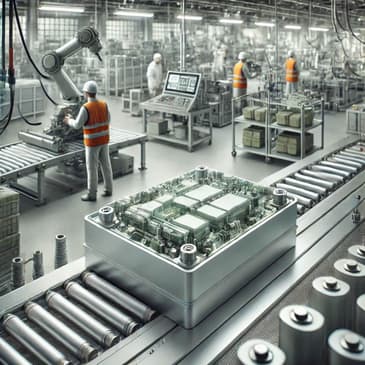
*Art by Dall-E
*ART PROVIDED BY DALL-e
Support this show http://supporter.acast.com/kilowatt.
Hosted on Acast. See acast.com/privacy for more information.
Hosted by Simplecast, an AdsWizz company. See pcm.adswizz.com for information about our collection and use of personal data for advertising.
[00:00:21] Hello everyone and welcome to Kilowatt, a podcast about electric vehicles, renewable energy, autonomous driving, and much, much more.
[00:00:27] My name is Bodhi and I am your host and I have one of the worst colds that I have had as an adult.
[00:00:35] It sucks. This is not a fun cold. I am able to talk today, which is Sunday. Friday, not so much.
[00:00:44] Saturday felt better, but we had family in town and it felt wrong to have family come in from out of town and then disappear and record a podcast.
[00:00:54] So they stayed until Sunday afternoon and then I wrote the show and here we are.
[00:01:00] But yeah, I apologize for all of these late shows. It is not intentional. I just happen to be very busy.
[00:01:08] And then right after I cleared a lot of stuff off my plate, I happened to get a super bad cold.
[00:01:16] And yeah, I don't like it. I don't like it. I feel awful when I miss the deadlines for this show. So I apologize about that.
[00:01:24] All right. I don't know if anybody noticed, but we are toward the end of 2024. We are wrapping it up.
[00:01:31] So what I thought I would do is I want to thank all the people, all the folks who support us, right?
[00:01:37] Um, I'm going to thank the folks who support us on a cast and as well as the folks who support us on Patreon, but we also have some free members.
[00:01:45] So we're going to do something a little bit different for the end of the year here.
[00:01:49] I have selected two paid members that basically sponsored each news story.
[00:01:55] So, uh, we'll, we'll give a shout out to two paid members at the beginning of each news story and everyone will know basically who sponsored that story, right?
[00:02:05] It does not mean that they're endorsing that story.
[00:02:09] I did not ask anybody if they wanted their names next to these stories.
[00:02:13] So I don't think there's anything very controversial that I'm going to talk about.
[00:02:18] I'm just letting you know that doesn't mean they're endorsing it, but we have a pretty decent size, uh, free tier for a podcast of our size.
[00:02:28] You know, uh, let's see. It looks like there's about nine people on there.
[00:02:32] So, so I want to start off at the beginning of the show and thanks.
[00:02:36] I think all of the folks who are on our free tier.
[00:02:39] And by the way, if you want to get on the free tier, you can do that.
[00:02:44] It's absolutely free.
[00:02:46] And the really big benefit to that is every now and again, I'll accidentally release a free episode to everybody, like an ad free episode to everybody, including those folks on the free tier.
[00:02:59] It doesn't happen very often, but I do like to offer it up every now and again.
[00:03:03] So let's start off by thanking members of our free tier.
[00:03:06] We're going to start off with Michael A., Steve M., Yellowboy Ricky Lee, Ernest, Elip84, Leanna M., Eric M., KCH, Eric S., Moe Cowbell, and Michael Muskie.
[00:03:25] Thank you very much for being on the free tier.
[00:03:27] I actually email back and forth with quite a few of these folks regularly.
[00:03:32] So thank you.
[00:03:33] All right, let's start off with our EV news.
[00:03:36] And our first story is brought to you by Frank P. and Brian S.
[00:03:41] Let's start this off.
[00:03:42] Canada's second largest province will ban the sale of light duty gasoline powered vehicles on January 31st, 2034, which is a little bit away to be honest.
[00:03:55] But what Quebec or what it sounds like Quebec really did here is they took a mandate that was set by the Canadian federal government that all new vehicles sold in Canada by 2035 must be zero emission vehicles.
[00:04:10] But there was a carve out or an exemption for plug in hybrid vehicles as long as they met certain requirements.
[00:04:18] Well, like I said, Quebec just took that a little bit further and banned all ice powered vehicles, which obviously includes when I say ice, I mean internal combustion engines.
[00:04:29] We do have some new folks listening to the show.
[00:04:33] So they banned all ice powered vehicles, which obviously includes hybrids and plug in hybrids.
[00:04:42] Our next story is brought to us by Fallen in Sea and Brad W.
[00:04:49] And this is more of a question really than it is a news story.
[00:04:54] How many delivery vans do you think Rivian has delivered to Amazon?
[00:04:59] And I'm going to I'm going to give you a second to think of that number.
[00:05:03] Think in your head how many delivery vans Rivian has delivered to Amazon.
[00:05:09] The number is 20,000.
[00:05:12] That is that's a large number, but that seems very low to me because it feels like in my little tiny part of the world, there are 20,000 delivery vans just here.
[00:05:24] You know, just here in Arizona or just here in the Phoenix area.
[00:05:27] We see them all over the place.
[00:05:30] But yeah, only 20,000 have been delivered.
[00:05:33] Now Rivian and Amazon's original deal was for Rivian to deliver their deliver them 100,000 vans by 2030.
[00:05:41] And if Rivian keeps, you know, improving their their production and manufacturing processes, I think they're going to hit that number pretty easy.
[00:05:49] But man, the number seemed low.
[00:05:51] Did it seem low to you?
[00:05:52] Just email me at Bodie, B-O-D-I-E at 918digital.com.
[00:05:57] And let me know if that number seemed low to you.
[00:06:00] Our next story is brought to you by Patrick44 and Jerbo.
[00:06:06] Tesla is looking for cities to test their new autonomous driving service in.
[00:06:11] And according to Bloomberg, Tesla has been working with the city of Austin, Texas since May of 2024.
[00:06:18] Honestly, this seems right to me.
[00:06:20] Elon said in October that they would start in Texas and California.
[00:06:26] You know, Giga Texas is in Austin.
[00:06:29] And, you know, Fremont Factory is in Fremont, which is right around Palo Alto.
[00:06:34] So I'd imagine that's where they're going to be testing the cyber cabs, at least initially.
[00:06:41] But, you know, we don't have that.
[00:06:43] That's not 100% for sure.
[00:06:46] But it's a pretty good guess.
[00:06:48] Pretty good guess.
[00:06:50] I would like you to please come to Phoenix.
[00:06:53] According to, you know, the media, we have the best roads for testing your cyber cab on.
[00:07:01] And I'd like to try one out.
[00:07:03] So please come to Phoenix.
[00:07:05] More specifically, Tempe.
[00:07:08] Next up, this story was brought to you by Kiwi Graham and Steve K.
[00:07:15] We have a rumor for the refreshed Model Y.
[00:07:19] And there are a lot of rumors going around about the refreshed Model Y.
[00:07:23] And I don't bring them up often because, you know, they're just rumors.
[00:07:28] But this one seems kind of valid.
[00:07:29] According to Car News China, the Model Y refresh or the Juniper, codenamed Juniper version of the Model Y,
[00:07:38] is set to launch in China early next year.
[00:07:41] And it will come in a five and six seat variant.
[00:07:45] Again, this rumor seems very likely.
[00:07:48] They did something pretty similar last year with the Model 3 refresh.
[00:07:52] So I give it some credibility.
[00:07:55] This next story was brought to you by Charles T.S. and Paul S.S.
[00:08:02] Tesla's Powerwall 3 is now in Puerto Rico.
[00:08:06] And I thought this was interesting.
[00:08:07] Tesla is already operating their virtual power plant in Puerto Rico, which I didn't know that that was the case.
[00:08:13] And right now, there are about 75,000 Puerto Rican Powerwall owners.
[00:08:20] That doesn't mean there's 75,000 Powerwalls.
[00:08:23] That's how many people actually own a Powerwall.
[00:08:25] So the number could be higher than that.
[00:08:27] And it's probably higher than that.
[00:08:28] But those folks of those folks of the 75,000 who qualify and are participating in the virtual power plant program,
[00:08:37] they are earning $1 per kilowatt hour when supplying the grid during an event.
[00:08:44] So I'm guessing an event means whenever the grid is under stress, whether that could be a natural disaster or, you know,
[00:08:52] people are just using a lot of power and they need a little bit of bolstering to help the Puerto Rican grid.
[00:08:58] But according to Tesla's website, $1 per kilowatt hour could net you between $500 and $1,200 a year.
[00:09:07] So not too shabby.
[00:09:39] And moving on to our next story.
[00:09:43] This story is brought to you by John B.
[00:09:45] And just another Nick.
[00:09:47] Here we go.
[00:09:48] So this is something I feel like we've talked about a bunch, which is solid state batteries.
[00:09:54] And I want to make sure we're all on the same page for a couple of different reasons.
[00:09:58] One is I think solid state batteries are going to be really big in 2025.
[00:10:03] And the second thing is, is I think when CES happens just in a couple of weeks here,
[00:10:09] we're going to be hearing a lot about them.
[00:10:11] And I'm going to actively seek out people who are in booths that are around solid state batteries.
[00:10:18] And I think we just kind of need a little refresher on what a solid state battery is,
[00:10:24] why they're good, why they're bad, that kind of thing.
[00:10:26] So let's start off with the difference between what we use currently in our EV batteries,
[00:10:33] the lithium ion EV batteries, and what a solid state battery is.
[00:10:37] So basically it is the current lithium ion batteries use this liquid or a gel electrolyte
[00:10:44] that conducts ions and insulate ions to and fro.
[00:10:47] The solid state battery uses a solid material that conducts and insulates the ions.
[00:10:53] And the solid material is typically ceramic, but that doesn't always mean that it will be ceramic
[00:10:59] or when they enter like full production, that will be the actual solid material.
[00:11:03] But those are the main differences.
[00:11:06] More or less, the chemistry and architecture are the same as current EV batteries.
[00:11:12] And I understand if you're an electrochemical engineer,
[00:11:15] you might be hearing me right now and want to punch me in the face.
[00:11:19] And I say, chill out, bro.
[00:11:20] We just need to kind of understand this.
[00:11:22] And I don't have the ability to explain it at your level or even understand it at your level.
[00:11:30] So I'm going to try and get a battery engineer on the podcast.
[00:11:34] But yeah, that's kind of what we're dealing with when it comes to the difference between
[00:11:38] a solid state and the current lithium ion batteries that we have.
[00:11:43] Now there are advantages to solid state batteries.
[00:11:46] One is they're more energy dense.
[00:11:49] Just to give you an example, and I put an article from Motor Trend in the show notes for this,
[00:11:54] but just to give you an example, a current 80 kilowatt hour battery could weigh over a thousand pounds.
[00:12:01] A solid state battery, 80 kilowatt hour battery, would weigh a bit over 330 pounds.
[00:12:08] So not only are they more energy dense, so you're going to get for that 80 kilowatt hours,
[00:12:14] you're going to get more range.
[00:12:16] It actually weighs less, which you'll get even more range.
[00:12:19] Another advantage of the solid state batteries is they can fully charge in about 10 to 15 minutes.
[00:12:29] And when I say fully charge, I mean up to 100%.
[00:12:31] It's pretty good.
[00:12:33] You don't really have to do the 80% or 50% of what some people will do.
[00:12:39] Another benefit is that they're safer.
[00:12:41] There is less of a chance of them catching fire.
[00:12:44] That does not mean a 0% chance.
[00:12:47] That just means less of a chance.
[00:12:49] And we'll talk about that here in a moment.
[00:12:51] Now let's move on to the disadvantages.
[00:12:54] Solid state batteries may use way more lithium than current batteries.
[00:13:00] When I say may, it's because we're not to full production of solid state batteries yet.
[00:13:05] We're still kind of in the R&D phase.
[00:13:08] So may use more lithium than current batteries.
[00:13:12] And some experts say it's between five and 10 times more.
[00:13:16] I don't necessarily think this is a big deal because we have a lot of lithium processing plants
[00:13:24] going, you know, getting up and running.
[00:13:26] And we kind of have, at least at the moment, a surplus of lithium.
[00:13:33] But this could be a big deal as these solid state batteries, you know, hit production and are actually being used.
[00:13:42] That could be a problem in the future.
[00:13:44] The other thing is solid state batteries are difficult to recycle.
[00:13:48] And that's for now.
[00:13:49] I mean, they're difficult to recycle probably, I would guess, you know, for a myriad of reasons.
[00:13:56] One of them being is there's not very many.
[00:13:57] So they don't really have systems and machinery to easily recycle.
[00:14:02] I mean, they're not really targeted as batteries to recycle.
[00:14:06] I'm sure that will change going forward.
[00:14:09] They also cost more or could cost more.
[00:14:11] But the biggest issue is that they can create these things called dendrites.
[00:14:18] And dendrites are created when you do a lot of repeated charging.
[00:14:23] They can also be created just as the battery ages.
[00:14:26] But dendrites kind of they can change the shape of the electrical, the lithium electrode, excuse me.
[00:14:33] And it creates like these branches that kind of grow like a tree.
[00:14:39] And eventually those branches could cause a short in the battery pack, which could cause a fire.
[00:14:46] It could also cause the battery pack just to fail.
[00:14:48] There's some other issues with solid state batteries, just that they're not as reliable at the moment.
[00:14:54] They're not as reliable.
[00:14:55] But yeah, that's kind of what we're dealing with in terms of solid state batteries.
[00:15:01] I would imagine that they're going to solve all of these issues soon enough.
[00:15:06] But we won't see commercialization, according to experts, until 2030 or 2035.
[00:15:13] Hopefully that was explained in a way that helps everybody understand it.
[00:15:19] And I didn't sound like a total buffoon there.
[00:15:21] So let me know.
[00:15:22] You can send me an email.
[00:15:24] It's bodie, B-O-D-I-E at 918digital.com.
[00:15:27] Now we have one last story that kind of is a good follow-up to what we just talked about.
[00:15:34] And this story is brought to you by Charles F., an Electron Raceway Fabricator.
[00:15:39] Car News China is reporting that MG is planning on introducing a semi-solid state battery in 2025.
[00:15:48] Which, again, I'm seeing a lot of news about solid state batteries in 2025, or rumors, I should say.
[00:15:57] Maybe not news.
[00:15:58] So it doesn't surprise me that MG, a Chinese company, and I think they're actually owned by a Chinese battery company.
[00:16:05] It doesn't surprise me that they're doing this.
[00:16:06] A semi-solid state battery, just in case you're curious, is a, it's half of our current technology lithium-ion batteries and half of a actual solid state battery.
[00:16:20] Like in April of 2024, NIO rolled out its first semi-solid state battery for their Chinese version of the ET7 sedan.
[00:16:31] It was 150 kilowatt hours, and the range was just ridiculous.
[00:16:36] It was estimated to be between 557, depending on some people you read, and 656 miles, which is like 900 to 1055 kilometers right around that.
[00:16:48] I'm not getting those numbers exactly right, but that's pretty close.
[00:16:52] But that just seems like a nutty amount of range on this battery pack.
[00:16:58] We actually talked about this story right around April, whenever it happened.
[00:17:03] But I hadn't really heard any follow-ups, like negative or positive.
[00:17:07] So I did a quick search for NIO's semi-solid state battery, and whether or not, you know, people were having issues.
[00:17:16] And I couldn't really find anything.
[00:17:17] And again, this is probably in a handful of cars in China.
[00:17:22] I didn't expect that I would find much of anything, but I wasn't able to find anything, anything that was negative towards these batteries.
[00:17:31] Lots of explainers, but nothing that would really lead me to think that these batteries have issues.
[00:17:39] So we'll see what happens over time here.
[00:17:42] And by the way, I have a couple more NIO stories.
[00:17:48] My voice is going.
[00:17:50] NIO's Envo EV brand is set to launch in Europe with the L60 SUV in early 2025.
[00:17:57] If you're not familiar, the L60, which I'm very infatuated with this car, is very similar to the Model Y,
[00:18:05] but costs $21,000 if you sign up for the battery subscription.
[00:18:09] And the battery subscription costs between $85 and $125 a month, which, you know, gets you over 300 miles with the $85 a month battery subscription.
[00:18:20] So that's pretty good.
[00:18:22] Over 300 miles is pretty good.
[00:18:23] And if you buy the car outright, it's $29,000.
[00:18:27] Or if you buy the battery outright, it's $29,000.
[00:18:30] And, you know, the Model Y starts in China at $35,000.
[00:18:35] And right now, the L60 is only available in China.
[00:18:39] And I didn't convert these.
[00:18:41] I didn't convert the dollar amounts or the price to one because I don't really have anybody in China who listens to this show.
[00:18:51] There's a few, but it's not a lot.
[00:18:53] So, and I'm not even sure that, you know, those numbers or the analytics on that are 100% correct.
[00:19:01] So, even though I gave you dollar amounts, this car is still only available currently in China, but is headed to Europe.
[00:19:09] No word on how much it will cost once it hits Europe.
[00:19:13] It's likely going to be higher.
[00:19:15] And, you know, Europeans and Americans, from what I can tell, don't tend to want to have to pay for a battery subscription.
[00:19:24] So, I don't know if the battery subscription will actually make it out of China or at least out of Asia.
[00:19:30] But I would imagine that's going to cost more than $29,000 or, you know, whatever it is, 30,000 euros, simply because there are tariffs in Europe, you know, against Chinese manufactured EVs.
[00:19:47] So, we'll see what that final cost ends up being.
[00:19:51] And then one final note.
[00:19:53] I'm a big fan of NIO.
[00:19:55] NIO had their NIO Day event yesterday, on Saturday, the 21st of December.
[00:20:03] They announced the ET9, which looks like just a great-looking car, and the Firefly brand.
[00:20:10] Their Firefly, start over.
[00:20:12] Their Firefly brand.
[00:20:14] I'm going to leave this all in.
[00:20:16] The Firefly brand is a new brand that they have that's super affordable.
[00:20:22] It's smart car sized.
[00:20:24] It looked really good.
[00:20:26] I'm going to be honest with you.
[00:20:28] The event, I saw the highlights of the event, which is about five minutes.
[00:20:32] It was in Chinese.
[00:20:33] It was very hard to follow.
[00:20:35] I was trying to read the subtitles.
[00:20:38] So, I'm going to wait for some of the American, European, and English outlets to report on this car and give us some more details, and then I'll get back to you.
[00:20:47] But the car itself looks super cool.
[00:20:49] It is a small car, but it's a really cool-looking small car.
[00:20:54] All right, everybody.
[00:20:55] That is it for me today.
[00:20:57] If you didn't hear your name read, don't worry.
[00:21:01] We have plenty of time left in the year to give everyone a proper thank you.
[00:21:07] But to the patrons, the ACAST supporters, and everyone who listens to this podcast, thank you so much for supporting this show in whatever way that you do.
[00:21:19] It really means a lot.
[00:21:20] If you're not, I'm looking forward to going to CES this year and providing some really good coverage and getting you a lot of fun and interesting interviews.
[00:21:31] Right now, I'm trying to get my media pass situated.
[00:21:33] Hopefully, that gets taken care of tomorrow on Monday.
[00:21:36] But the most important thing here is thank you, everyone, so much for being so supportive.
[00:21:42] It fills my heart up with joy and love and everything that you folks give back to this show.
[00:21:52] I truly believe I get way more from you folks than I give out.
[00:21:59] So thank you, thank you, thank you for being a part of this show.
[00:22:03] All right, everybody.
[00:22:04] I will talk to you on Tuesday.
[00:22:06] For real, I'll talk to you on Tuesday.
[00:22:08] I hope you all have a wonderful Monday.
[00:22:11] And I will talk to you soon.
[00:22:13] Bye.